
5 September Classroom Expectations Worth Reviewing
The first few weeks of school are full of teaching routines and expectations. You spend time showing students how to enter the classroom, where to put their belongings, how to transition, what different voice levels sound like, and how to work together. You practice all your procedures until they start to feel like second nature.
Then September happens.
Students settle in. They get comfortable. The excitement of the new school year starts to fade, and some of those carefully practiced routines begin to loosen. Students start talking while you’re giving directions, transitions take a little longer, and you find yourself giving reminders that you weren’t giving a week or two ago.
Sound familiar?
This doesn’t mean your classroom management isn’t working. It simply means your students are ready for a little review. September is the perfect time to revisit the expectations that students use every single day without turning each one into a lengthy classroom management lesson.
Here are five September classroom expectations worth reviewing this month, along with a simple way to reinforce each one.
1. Listening
What starts to slip:
At the beginning of the year, students are usually pretty eager to show you they know how to listen. They look at the speaker, wait their turn, and try to follow directions the first time.
A few weeks in, you may notice more side conversations, students talking while classmates are sharing, or several hands going up before you’ve even finished asking the question. You might find yourself saying, “Eyes on me,” or “I wasn’t finished yet” more often than you’d like.
A simple way to reinforce it:
Instead of giving another long reminder about what good listening looks like, take 30 seconds to ask students to name a few behaviors they should see when someone is speaking. Then choose one or two to focus on for the day.
You could even use a quick visual that shows what strong listening looks and sounds like. Keep it posted during lessons and discussions so you can point to it instead of repeating the same reminder throughout the day.
The goal isn’t to make students perfectly silent every time someone speaks. It’s to remind them that listening is an active classroom habit.
2. Voice Levels
What starts to slip:
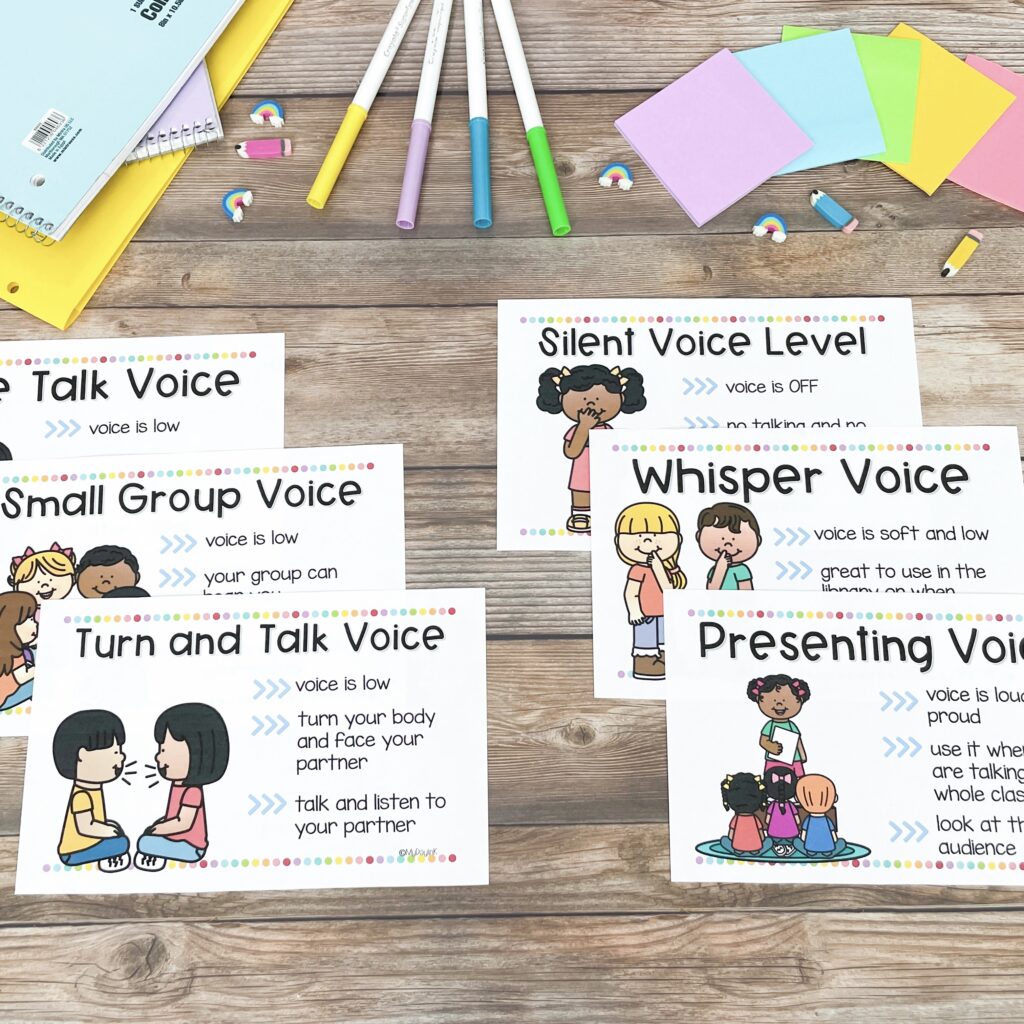
Remember when everyone knew exactly what a level 0, 1, 2, or 3 voice sounded like? After a few weeks, those levels can start to get a little…creative.
A whisper somehow becomes a normal speaking voice. Partner conversations turn into table conversations. Table conversations turn into everyone-talking-at-once conversations.
You know how it goes.
A simple way to reinforce it:
Rather than simply telling students to “lower their voices,” give them a quick opportunity to practice the voice level you’ll need.
Before students begin an activity, say, “You’re going to be working with a partner, so let’s practice what a level 1 voice sounds like.” Have them try it for a few seconds, then begin.
You can also keep your voice-level visual displayed so students have a quick reference when they aren’t sure how loudly they should be talking.
A 20-second reminder before an activity can save you several minutes of “Too loud!” reminders once the activity begins.
3. Transitions
What starts to slip:
Transitions are often one of the first things to fall apart once students become comfortable.
At the beginning of the year, everyone may move carefully because they are still learning what you expect. By September, students know where they’re going, so they start adding little extras along the way. Someone stops to sharpen a pencil. Someone needs to tell a friend something. Someone suddenly remembers they need to get a tissue.
Before you know it, a transition that should take two minutes is taking five.
A simple way to reinforce it:
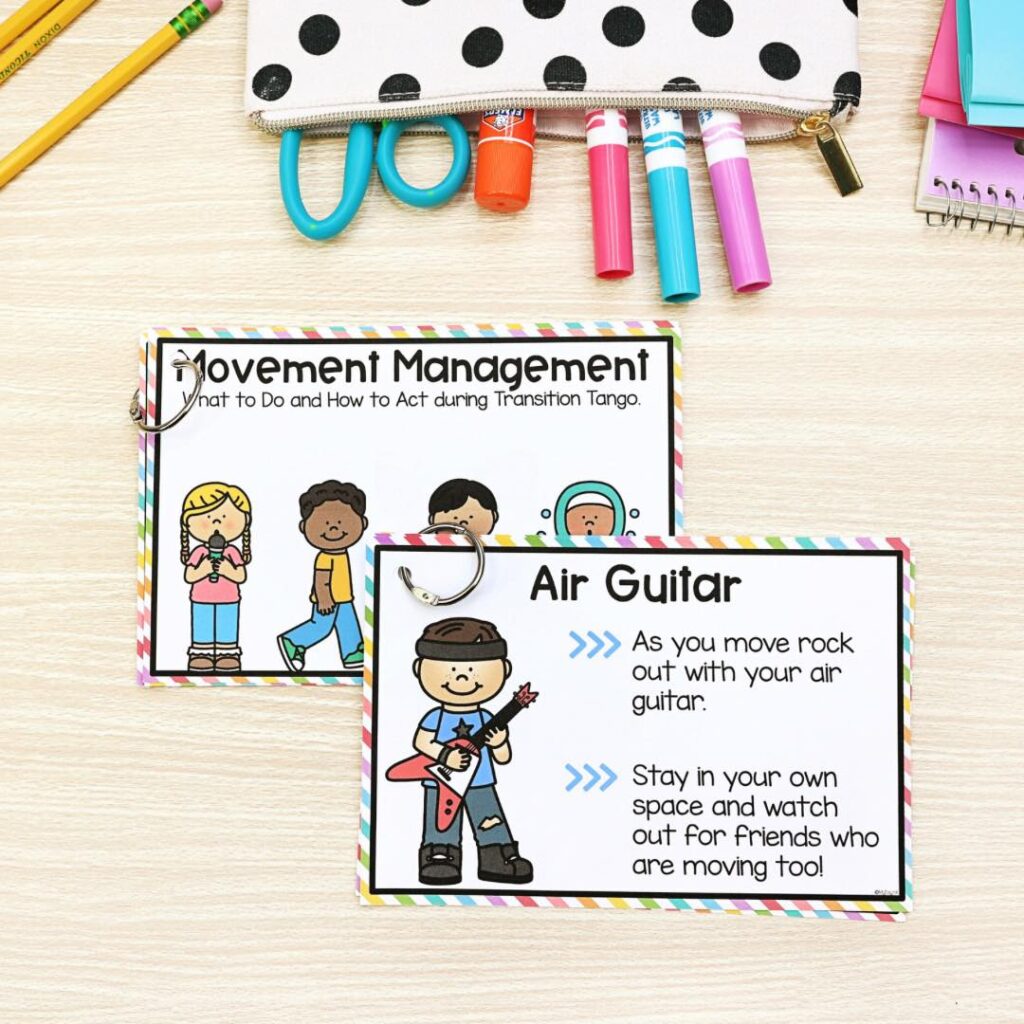
Choose one transition that needs a little attention and practice it again.
Before the next transition, remind students what you want to see, then have them do it. If it doesn’t go well, simply try again.
You might say, “Let’s see if we can get from our desks to the carpet quietly and ready to learn in one minute. Remember: voices off, materials away, and eyes on the meeting spot.”
Then let them try.
You don’t need to turn it into a competition every time, but giving students a clear goal and an opportunity to practice can quickly bring a familiar routine back into focus.
4. Kindness and Classroom Community
What starts to slip:
The beginning of the year often comes with lots of intentional community building. Students are getting to know each other, learning names, and practicing how to work with classmates.
As the weeks go on, students become more comfortable with one another, which is wonderful, but it can also mean that the filter starts to disappear.
Comments become a little less thoughtful. Students interrupt each other. Someone gets frustrated during partner work. A joke doesn’t land the way someone intended.
These moments are opportunities to remind students that being part of a classroom community means more than simply being in the same room.
A simple way to reinforce it:
Use a quick scenario or discussion prompt rather than giving students a long lecture about kindness.
Present a simple situation and ask, “Was that a strong choice or a weak choice? What could the student do differently?”
This gives students a chance to think through everyday classroom situations and consider how their choices affect other people. It also gives you a natural way to reinforce your expectations without calling out a specific student or situation.
And sometimes, those quick conversations are much more powerful than another reminder to “be nice.”
5. Making Strong Choices
What starts to slip:
By September, students know your expectations. They know the rules, they know the routines, and they have heard what you expect from them.
That means this is a great time to start shifting the conversation from “What are the rules?” to “What choice are you making?”
Students will still make mistakes, forget expectations, and need reminders. That’s part of learning. But instead of treating every behavior as a rule violation, you can help students start thinking about the choices they’re making and the consequences of those choices.
A simple way to reinforce it:
Use short classroom scenarios and have students decide whether the character is making a strong or weak choice.
For example:
“Your teacher is giving directions, but you are whispering to your friend. Strong choice or weak choice?”
“You finish your work and quietly help your partner instead of distracting them. Strong choice or weak choice?”
“You are frustrated with your group, so you take a breath and explain how you feel. Strong choice or weak choice?”
These quick scenarios take just a few minutes and give students an opportunity to think about classroom expectations without waiting for a real-life situation to happen.
They also give you language you can use later. Instead of saying, “Stop doing that,” you can ask, “Is that a strong choice?”
That small shift encourages students to think about their behavior instead of simply waiting for an adult to correct it.
You Don’t Have to Reteach Everything
When classroom management starts to feel a little shaky in September, it’s tempting to think you need to go back and reteach every single routine from the beginning.
You don’t.
Look for the expectations that are starting to slip and give those specific habits a quick reset. A visual reminder, a 30-second discussion, a quick practice round, or a few scenarios can be enough to bring an expectation back to the front of students’ minds.
The goal isn’t to spend your entire day talking about classroom management. It’s to build small opportunities to reinforce the habits that help your classroom run smoothly.
And remember that you’re not only correcting students when expectations aren’t met. You are also helping them develop the independence to recognize expectations and make strong choices on their own.
Try a Quick Strong vs. Weak Choice Sort
One of my favorite ways to revisit September classroom expectations without making it feel like a giant lesson is through quick scenarios.
Students can read a situation, decide whether the character is making a strong or weak choice, and explain what the student could do differently if needed. It’s simple, but it gives you a chance to reinforce several classroom expectations at once while getting students thinking about their own choices.
I’ve created a mini set of Strong vs. Weak Choice scenarios that you can use for free in your classroom.
Use them during morning meeting, as a quick discussion before a lesson, during a classroom reset, or whenever you need a simple way to revisit expectations.
Grab the free Strong vs. Weak Choice scenario sort.
Want More September Classroom Expectations & Management Support?
If you like these Strong vs. Weak Choice scenarios, you’ll love having an entire collection of ready-to-use classroom management resources at your fingertips.
You can grab a few of the scenarios here for free. And if you want the complete set plus my September classroom expectations & management resources, they’re waiting for you inside Management Made Simple.
Management Made Simple is designed to help you maintain the routines and expectations you’ve already worked so hard to establish without spending your planning time creating every visual, slide, activity, and SEL tool yourself.
Inside the membership, you’ll get practical classroom management support throughout the year, including ready-to-use visuals, slides, SEL tools, activities, and monthly resources that help you tackle the classroom management challenges that come up as the school year changes.

Instead of waiting until your classroom feels completely off track and then trying to figure out what to do, you’ll have resources ready to help you reset, reinforce, and keep moving forward.
You’ve already done the hard work of building your classroom routines. Management Made Simple helps you keep them going.
Keep Those September Classroom Expectations Going
September doesn’t require a complete classroom management overhaul. Your students don’t need another 45-minute lesson about every rule and routine you’ve already taught them.
They need reminders. They need practice. They need opportunities to talk about expectations and make choices. Most importantly, they need consistency.
Choose one expectation that could use a little attention this week. Give it a quick reset, reinforce it when you see students doing it well, and move on.
Those small moments of maintenance can make a big difference in keeping your classroom calm, productive, and connected throughout the rest of the year.