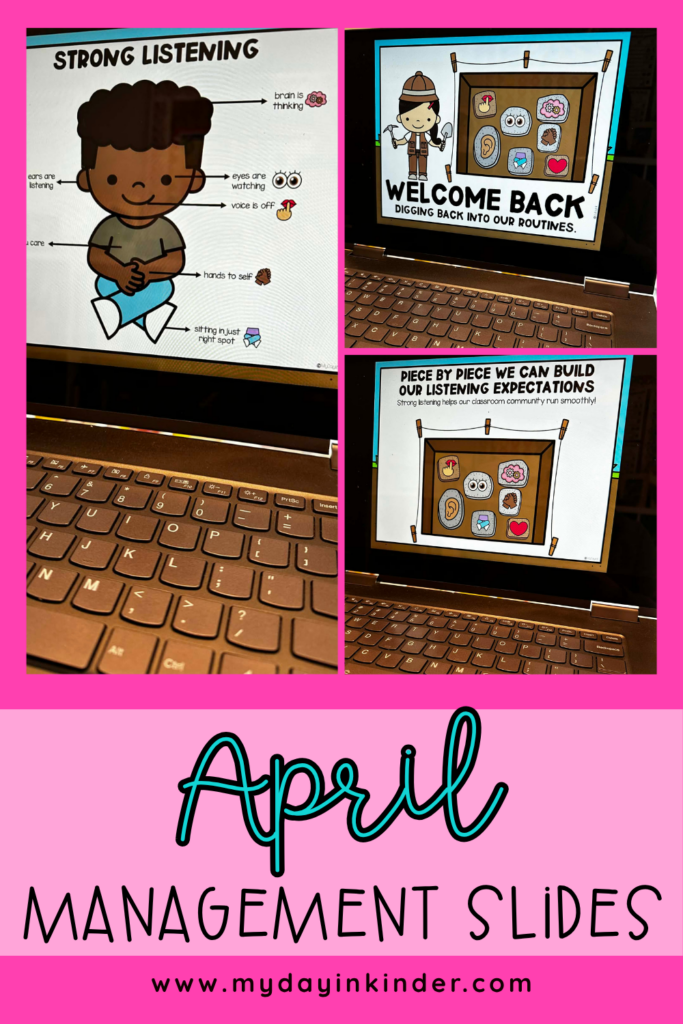
April Management Slides: The Simple Reset Your Classroom Probably Needs Right Now
April is a weird month in the classroom.
You’ve made it through the chaos of March. You’ve survived the pre-spring break energy. And now suddenly… your students are back, a little louder, a little more comfortable, and a lot less interested in following routines the way they did in January. And honestly? You’re probably feeling it too.
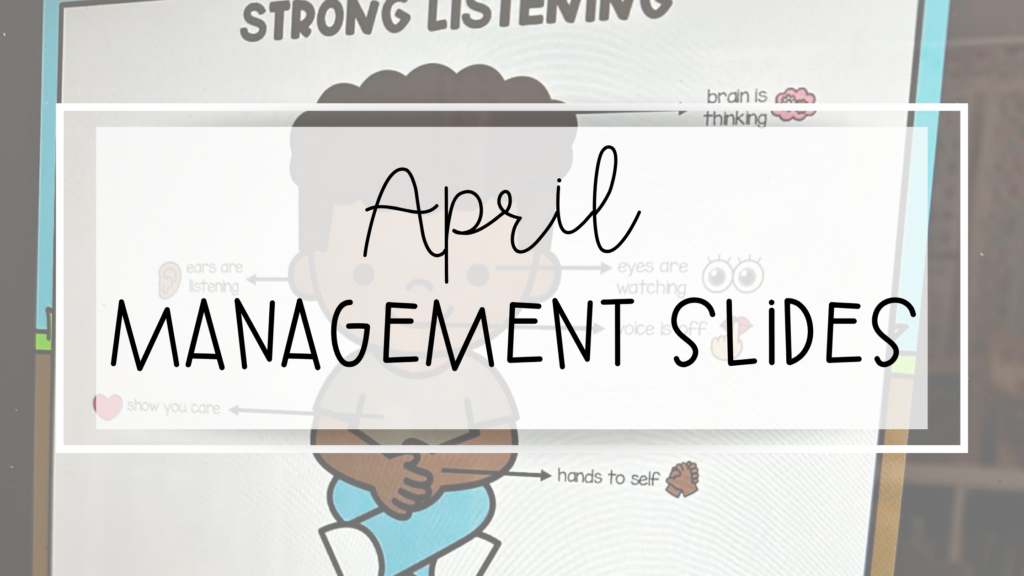
This is the time of year when classroom management doesn’t fall apart completely; it just slowly gets harder. Directions need repeating. Transitions take longer. Independent work feels less… independent. That’s why April is the perfect time for a reset, not a big, overwhelming one, but a simple, consistent review of expectations. And one of the easiest ways to do that? April management slides.
Why April Is the Time to Revisit Expectations
By the time students come back from spring break, routines aren’t gone, but they’re definitely not as strong. Breaks disrupt structure. Students get used to more freedom. And when they return, they often need reminders about what school expectations actually look like.
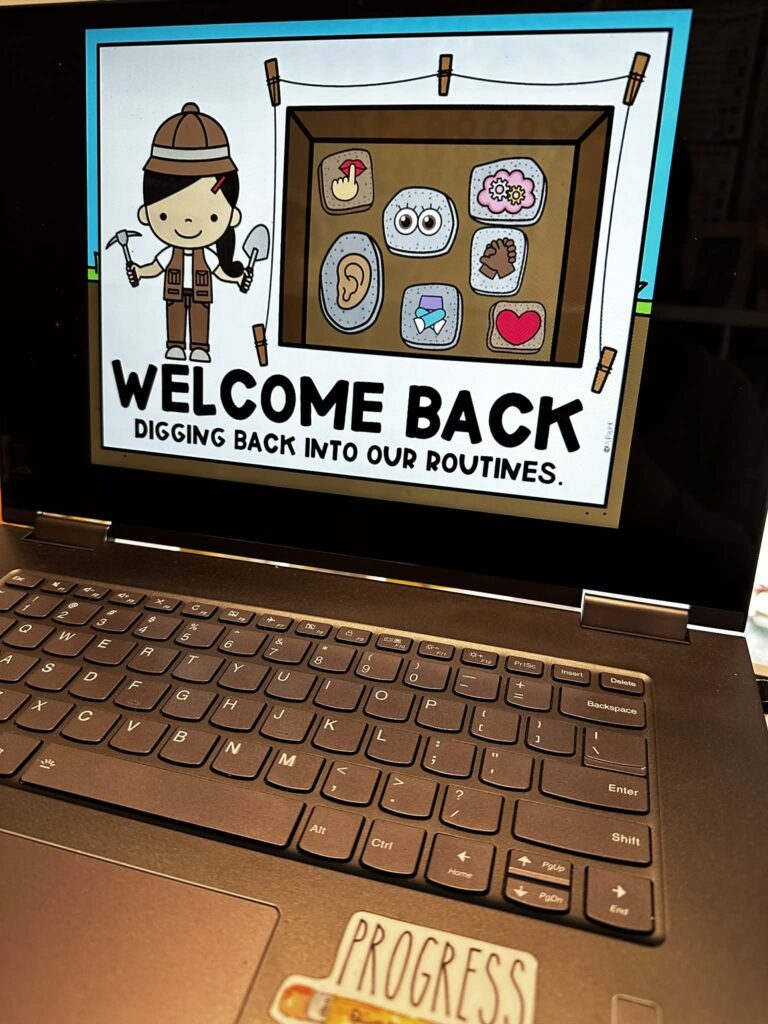
The key here is not to assume they remember.
Young learners need:
- Clear expectations
- Repetition
- Visual reminders
- Consistent language
These aren’t just beginning-of-the-year strategies; they’re all-year strategies. April management slides work because they bring those elements back into your classroom in a quick, consistent, and low-effort way.
What April Management Slides Actually Do
If you’ve never used management slides before, think of them as quick visual resets built into your day. They’re not long lessons. They’re not extra work. They’re short, focused moments where you:
- Review expectations
- Talk through behavior scenarios
- Reinforce routines students already know
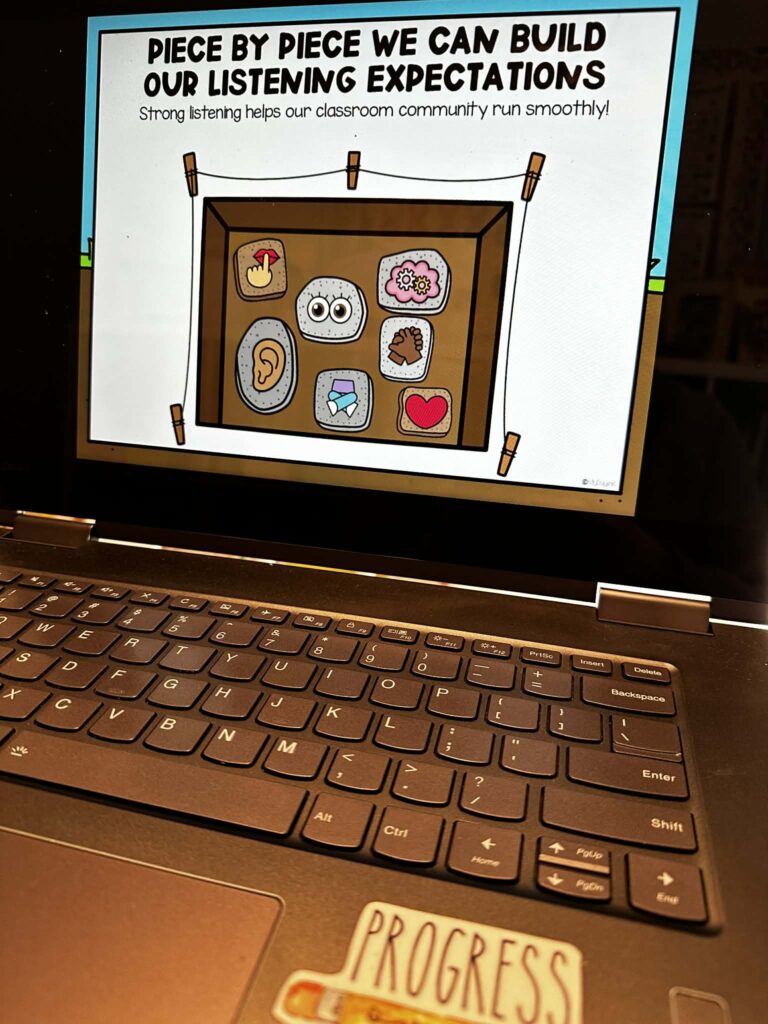
Many slide sets include “strong vs. weak choice” examples in which students look at a situation and decide which choice is better. This turns behavior into something interactive rather than just telling them.
And that’s the difference, students aren’t just hearing expectations, they’re thinking about them.
How to Use April Management Slides Without Losing Instruction Time
One of the biggest misconceptions about reviewing expectations is that it takes too much time. In reality, these slides are meant to fit into the time you already have.
Use Them During Morning Meeting
Morning meeting is one of the most natural and effective times to build in behavior review, especially in April when routines need a little extra reinforcement. The beauty of a morning meeting is that it already exists in your schedule; you’re not adding anything new, just being more intentional with the time you already have.
At the start of the day, students are settling in, adjusting to the classroom environment, and looking for structure. This makes it the perfect moment to ground them in expectations before the day really gets going. Instead of jumping straight into academics or announcements, you can take a minute or two to revisit what strong choices look like in your classroom.
Start your day with a quick slide:
- Show a scenario
- Ask, “Is this a strong or weak choice?”
- Let students explain their thinking
This small shift turns the morning meeting into a proactive management tool rather than just a routine. It sets clear expectations, gets students thinking, and creates a shared understanding of behavior, all before your first lesson even begins. And the best part? It doesn’t add anything extra to your schedule, but it makes everything that follows run more smoothly.
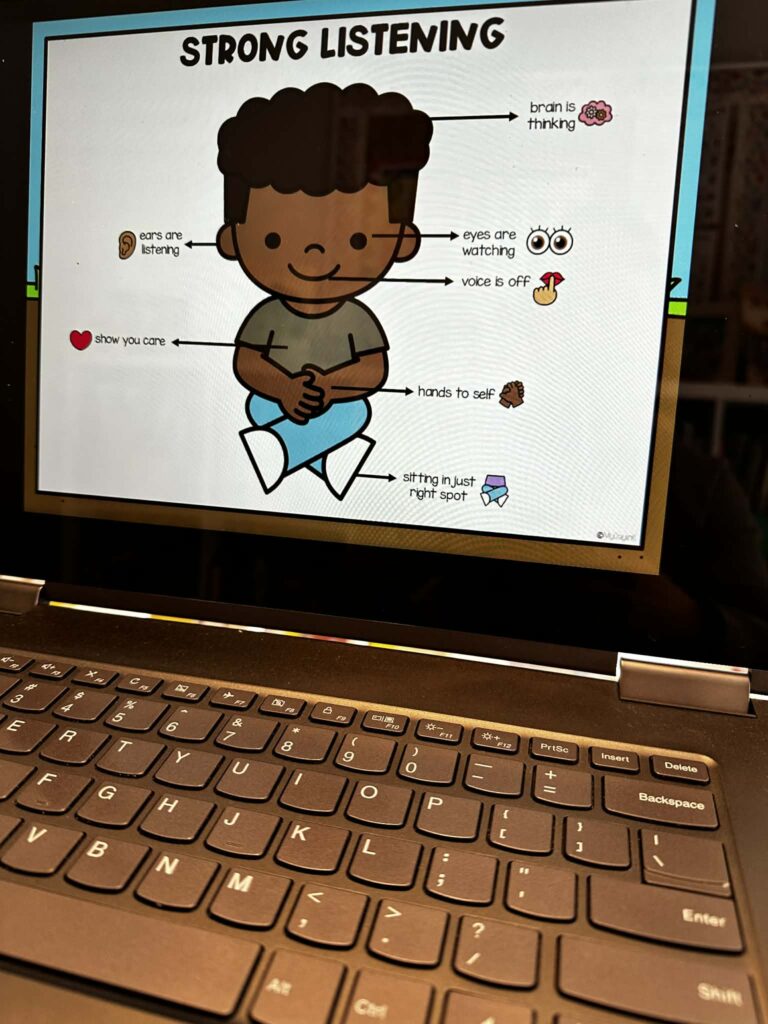
Use Them During Transitions
If there’s one part of the day where classroom management is most likely to fall apart, it’s transitions. Moving from one activity to another, lining up, switching subjects. These are the moments where students tend to get off track, especially later in the year when routines aren’t as tight as they once were.
By April, transitions often take longer than they should. There’s more talking, more movement, and more reminders needed. It can start to feel like you’re constantly correcting behavior instead of teaching.
That’s why previewing expectations before a transition is so powerful.
Instead of waiting until things go wrong, take 30 seconds to get ahead of it. Show a slide and bring attention to what the transition should look like.
“Let’s look at this! What should lining up look like?”
This quick moment helps students visualize the expectation before they’re asked to follow it. It shifts them from reacting to being prepared. And more often than not, that short preview prevents multiple corrections, resets, and repeated directions later.
Use Them After Recess or Specials
Coming back from recess or specials is one of those predictable challenge points in the day. Students return with higher energy, more excitement, and sometimes a little less focus. It’s completely normal, but it also means this is a key time to reset expectations.
Instead of jumping straight back into instruction and hoping students settle quickly, taking a minute to ground them can make a big difference. This doesn’t need to be a long conversation or a full lesson. It just needs to be intentional.
Project a slide and quickly review expectations:
- Voice levels
- Personal space
- Getting back to work
These quick refreshers act like a reset button. They help students shift from unstructured recess time back into learning mode in a clear and supportive way. Rather than spending the next ten minutes redirecting behavior, you’re giving students exactly what they need upfront to be successful.
Why Visuals Work So Well This Time of Year
By April, students have heard your expectations hundreds of times. So just repeating them again? Not always effective.
Visuals change that.
When students see a behavior, compare choices, and talk about it, it becomes more concrete. It gives them something to connect to instead of just another verbal reminder. Slides also create consistency. The language stays the same. The expectations stay clear. And students know exactly what you’re referring to when you revisit them.
The Real Goal: Maintenance, Not Reinvention
April isn’t about starting over. It’s about maintaining what you’ve already built.
You don’t need a brand-new system. You don’t need to reteach everything from scratch. You just need small, consistent reminders that keep expectations fresh. That’s what makes tools like April management slides so effective. They support what you’re already doing instead of adding more to your plate.