Teach Them to Be Students: How to Build Student Independence from Day One
The first day of school often arrives like a whirlwind—new faces, new routines, and a classroom full of students who aren’t quite sure what’s expected of them yet. For Kindergarten and First Grade teachers, this can feel like managing controlled chaos unless you’ve laid the groundwork ahead of time. The last thing you are thinking about is how to build student independence.

That’s why June is such an underrated planning month. With a little breathing room and space from the daily grind, you can start thinking clearly about the kind of classroom community you want to build and, more importantly, how to help students become independent learners right from day one.
This post will walk you through how to teach students what it means to “be a student,” and how to create a structure that helps them thrive independently in your classroom.
What “Being a Student” Looks Like in Kindergarten and First Grade
We sometimes assume students know what school is supposed to look like, but for many children, especially those entering Kindergarten, this might be their very first structured learning environment. Even first-graders can benefit from revisiting the basics, especially after summer break.
“Being a student” means more than sitting still or raising a hand. It includes:
- Understanding how to use materials respectfully
- Knowing how to ask for help and manage frustration
- Following multi-step directions with minimal assistance
- Taking responsibility for one’s own learning space
- Participating in group discussions and whole-group instruction appropriately
The key is to be intentional and explicit. Think about the small, daily tasks that help a classroom run smoothly. Everything, from sharpening a pencil to transitioning from centers to the carpet, should be treated as essential learning moments.
The more explicitly we define and teach what student behavior looks like, the more confident and independent our students become.
Modeling vs. Reminding: Why the Beginning Matters
In the early weeks of school, how you teach expectations matters just as much as what you teach.
When we constantly remind students what to do without teaching them how to do it, we create a cycle of dependence. But when we take the time to model behaviors, step by step, we give students the tools to take ownership.
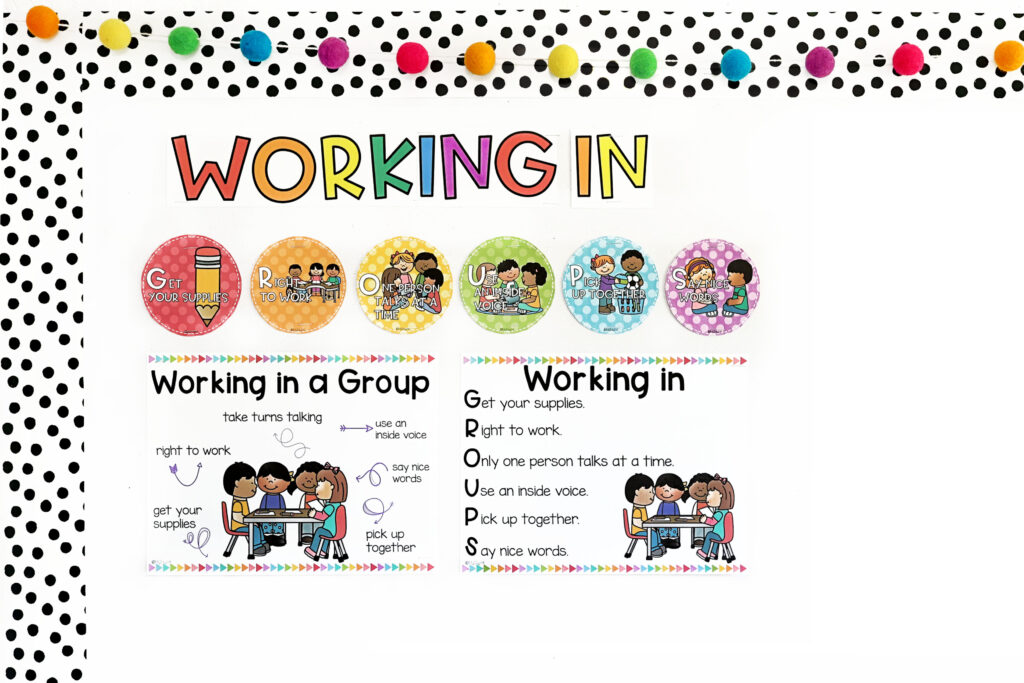
Let’s say you want students to clean up their centers:
- Instead of saying, “Don’t leave a mess,” model cleaning up carefully, narrate your actions, and invite a student to try.
- Walk through it slowly and make space for mistakes and redos—not with frustration, but with encouragement.
This may feel repetitive at first, but the early investment pays off. Students internalize routines faster and require fewer prompts over time. It’s helpful to plan which behaviors and routines you’ll model on day one and throughout the first week. Practice routines when students are calm and you’re not rushing to get through content. You’re building habits that will carry you through the year.
Tools to Build Student Independence
Once you’ve planned what routines to teach and how to model them, think about the tools and supports that will help students maintain independence without constant adult input. A well-prepped environment reduces confusion and boosts student confidence.
Visuals for Routines and Procedures
Young learners thrive with predictable visual cues. Clear, simple posters that illustrate step-by-step tasks, such as lining up, using the bathroom, or choosing a center, can help reduce verbal reminders. Display them at eye level and refer to them often during the first weeks.
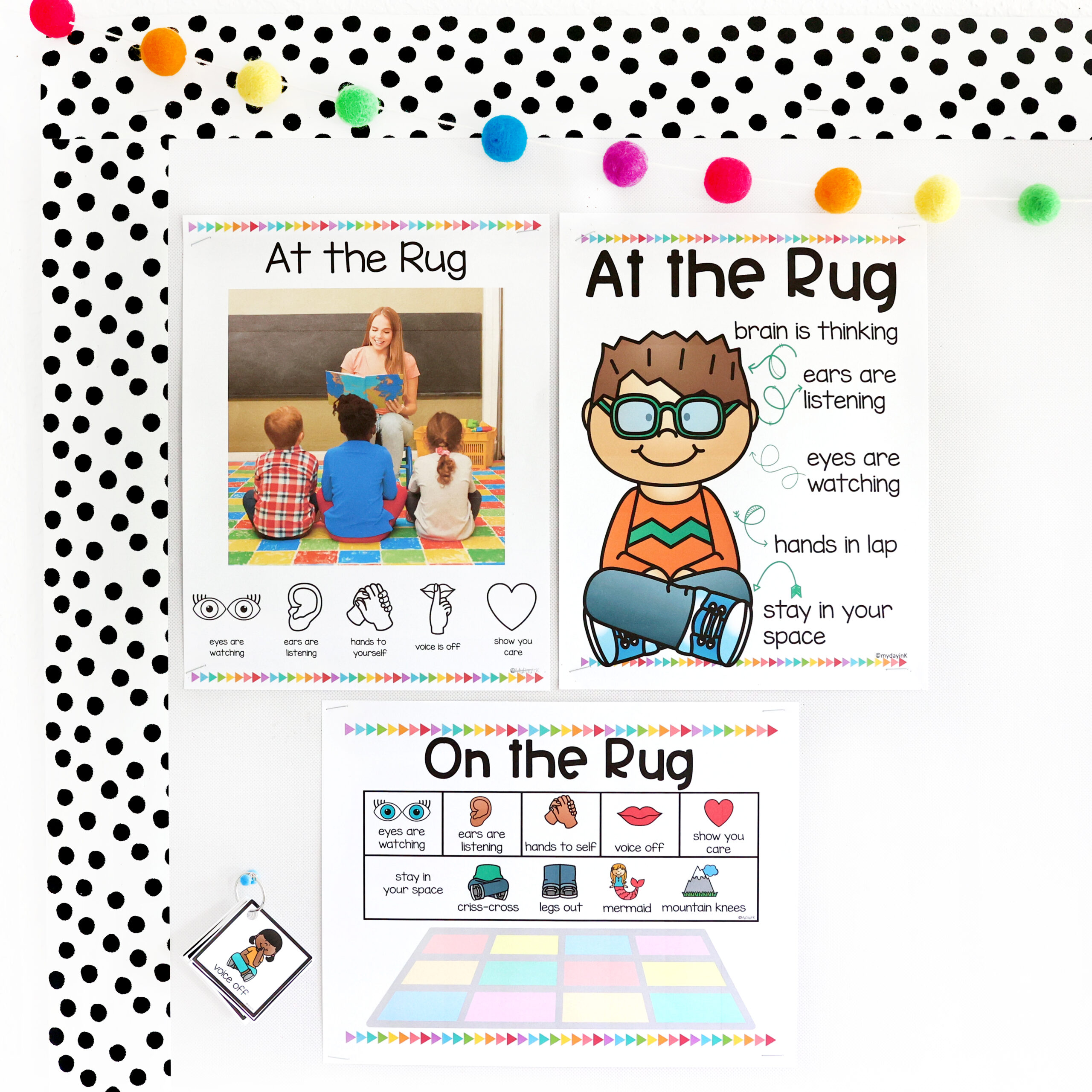
You can also use visual schedules, choice boards, and picture cues at student desks or centers to promote autonomy.
Procedures Books or Expectations Charts
Consider creating a classroom procedures book, a simple photo or illustrated guide showing key routines. Students love seeing pictures of themselves practicing expectations, as it provides a tangible reminder of how things work.
Another option is to co-create anchor charts that outline expectations together. As a class, brainstorm what it “looks like” and “sounds like” to walk in the hallway, listen during a read-aloud, or work with a partner. Involving students in this process builds ownership and buy-in.
Management Boards and Behavior Supports
You might also introduce basic classroom management boards that foster responsibility. This could be a simple job chart, a visual check-in station, or an “I need help” signal system. These tools don’t just help you manage behavior—they empower students to regulate their needs and actions with less intervention.
A Sample Day One Flow That Builds Independence
Not sure where to start? Here’s an example of how you can structure your first day to teach routines and build student independence from the moment students walk in the door.
Arrival Routine
Greet each student at the door, and then slowly walk the class through what to do when they enter the room. Demonstrate each step: where to put backpacks, how to turn in folders, what to do for morning work, or morning tubs. Give them a chance to practice and then practice again. Repeat the process until it feels natural.
Morning Meeting
Introduce the class to your three to five core expectations (such as “Be kind,” “Be safe,” and “Take care of our space”) during the morning meeting. Use a picture book like David Goes to School or What If Everybody Did That? to spark discussion. Keep expectations positive, simple, and visual.
Lining Up and Transitions
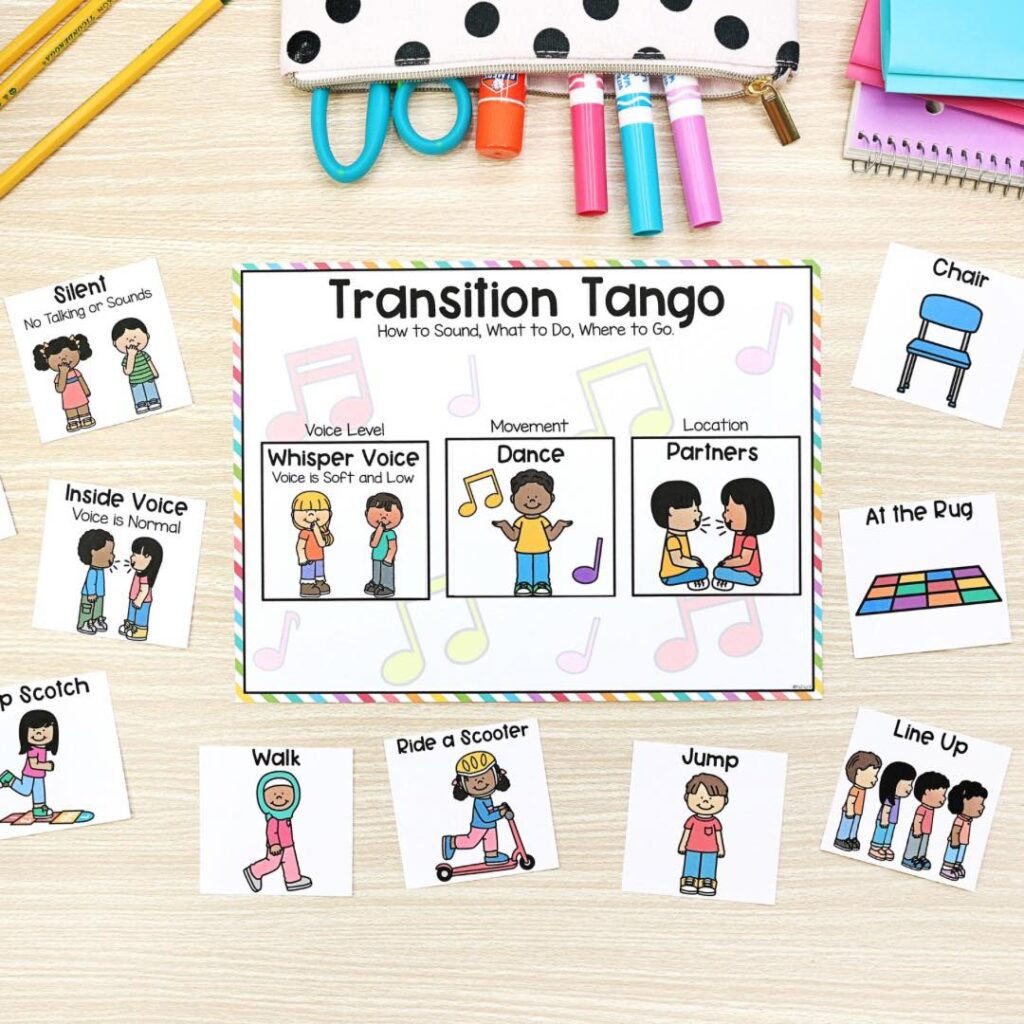
Teach what lining up looks and sounds like. Demonstrate both the wrong and right way (kids love acting out the “wrong” way). Take a short walk around the school to practice hallway behavior. Don’t rush, this is time well spent. Transitions are important in all classrooms. You could even add in some transition music.
Centers and Cleaning Up
Choose one or two centers to introduce. Model how to use each material, how to share, and how to clean up when the timer goes off. Keep things slow and structured. Build in reflection time: What went well? What can we practice again?
Packing Up and Dismissal
Just like arrival, walk through dismissal routines one step at a time. Let students pack up early, talk them through where to go, and end the day with a short closing routine so it becomes something they can eventually do with minimal support.
You don’t need to introduce every routine on day one, but the key ones should be taught clearly, repeatedly, and with intention.
Grab Your Free Trainings
To make your planning even easier, I’ve put together free trainings to help you map out the exact routines and behaviors to introduce on the first day of school.
Use them to:
- Identify which routines to teach first
- Check off which visuals and tools you’ll need
- Plan your flow for teaching, modeling, and practicing expectations
If your goal is to build student independence, don’t wait until the school year starts to think about it. Use the calm of June to reflect on your routines, prep your visuals, and plan how you’ll introduce expectations from day one.
A structured classroom where students know what to do and can do it without your constant direction doesn’t happen by accident. It’s created with purpose, consistency, and a lot of early modeling.
When students understand how to be successful in your classroom, they arrive with more confidence, greater ownership, and increased joy.
Start early, stay consistent, and remember: the independence you build in September is what makes the rest of the year flow.
