How to Embed Classroom Management Review Into Your Everyday Routines
There’s always that moment in the school year when things start to feel… wiggly. The routines you swore were solid in September? Suddenly forgotten. The line that used to be silent? Now sounds like a birthday party. Independent work time? Somehow louder than recess. And your first instinct might be, “I need to stop everything and reteach expectations.” But then reality hits: When exactly are you supposed to do that? This is where many teachers feel stuck. You know expectations need reviewing. You can see the cracks forming. But carving out a separate 30-minute “classroom management review” block feels impossible when you’re already racing to fit in phonics, math, writing, and small groups.
You don’t need extra time.
You just need to use the time you already have differently.
The Myth: Classroom Management Review Takes Extra Time
Let’s start with the biggest misconception. Many teachers believe classroom management review means pausing academics for an entire lesson. It sounds like one more task added to your already full day. And when you’re teaching primary grades, every minute matters. You’re building foundational skills. You’re working on stamina. You’re managing tiny humans with big feelings.
So the thought of “doing a behavior lesson” feels like something you can’t afford.
But that’s where the myth sneaks in.
Review doesn’t have to look like a sit-down lecture. It doesn’t have to mean pulling out a giant anchor chart and starting from scratch. It doesn’t require sacrificing reading instruction or math centers. In fact, when done correctly, review fits inside your existing routines, not on top of them.
The Truth: Review Protects Instructional Time
Here’s what actually happens when expectations aren’t reviewed: you repeat directions five times. You stop teaching to address blurting. You reset the line three times. You spend ten minutes calming post-recess chaos.
That adds up.
Embedded review works because it’s preventative. When expectations are clear and fresh in students’ minds, transitions move faster. Independent work is smoother. Recess incidents decrease. Students feel more confident because they know exactly what’s expected.
Instead of reacting to problems, you’re preventing them.
And prevention always takes less time than repair.
When you spend 60 seconds reviewing expectations before a transition, you often save 5–10 minutes of correcting behavior afterward. That’s instructional time protected, not lost.
What Embedding Review Actually Looks Like
Embedding review means you’re not stopping instruction, you’re strengthening it. You’re taking moments that already exist in your day and layering quick reminders into them. No new block. No complicated system. Just intentional, brief reinforcement.
It’s proactive, predictable, and consistent.
Here’s how that can look in real primary classrooms:
During Transitions
Transitions are where classroom management either shines or unravels. Moving from carpet to tables, lining up for specials, and cleaning up centers. These are high-risk moments for noise, silliness, and lost time. Instead of waiting to correct behavior, preview it.
Before students move, take 30 seconds:
- “Show me what quiet feet look like.”
- “What should our hands be doing in line?”
- “What voice level are we using?”
You can even model a quick “strong choice vs. weak choice” scenario verbally:
- “Is running to line a strong choice or a weak choice?”
- “What about walking with hands at sides?”
That 30-second preview often prevents the 3-minute reset.
Before Recess
Recess energy is real. Students are excited. They’re ready to move. And when excitement rises, impulse control tends to drop. Instead of hoping they remember expectations from August, give them a fast refresher right before they leave.
You might say:
- “What do we do if someone wants the same ball?”
- “What does safe play look like?”
- “Where do we stay on the playground?”
Some teachers use visual slides that show playground scenarios, one student sharing appropriately, and another grabbing. Students identify the strong choice before heading outside. These quick visuals make expectations concrete and memorable. Fewer post-recess conversations. More instructional time when you return.
During Morning Meeting
Morning meeting is one of the most natural places to embed behavior review because it’s already built for discussion and community. Instead of treating it as a separate “behavior reset,” simply spotlight one routine per day.
For example:
- Monday: Carpet expectations
- Tuesday: Independent work
- Wednesday: Hallway behavior
- Thursday: Recess
- Friday: Centers
Show or describe a scenario:
- A student raising their hand and listening
- A student blurting and interrupting
Ask:
- “Which is the strong choice?”
- “Why?”
Students explaining expectations out loud strengthens ownership and accountability.
During Independent Work
Independent work time can quickly turn into “teacher repeats directions 47 times” if expectations aren’t fresh.
Before releasing students, preview:
- “What does a strong choice look like during writing?”
- “If you need help, what do you do first?”
- “What voice level are we using?”
Then display a simple visual reminder. Perhaps an image showing a student working quietly, raising a hand appropriately, and staying in their seat. These visual cues reduce interruptions and allow you to run small groups without constant redirection.
Visual Examples
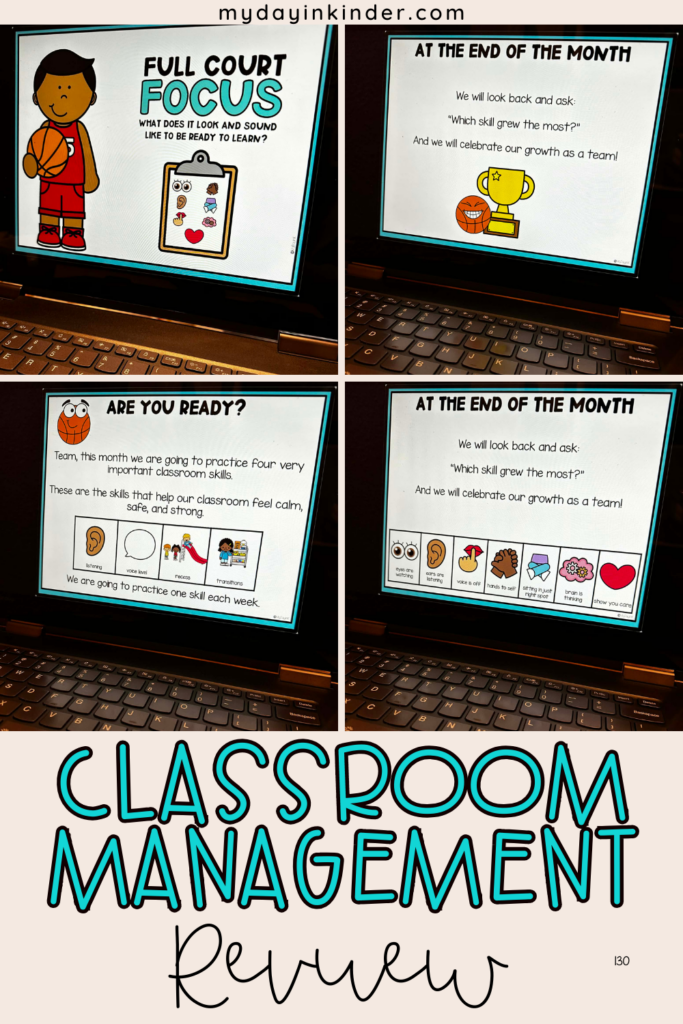
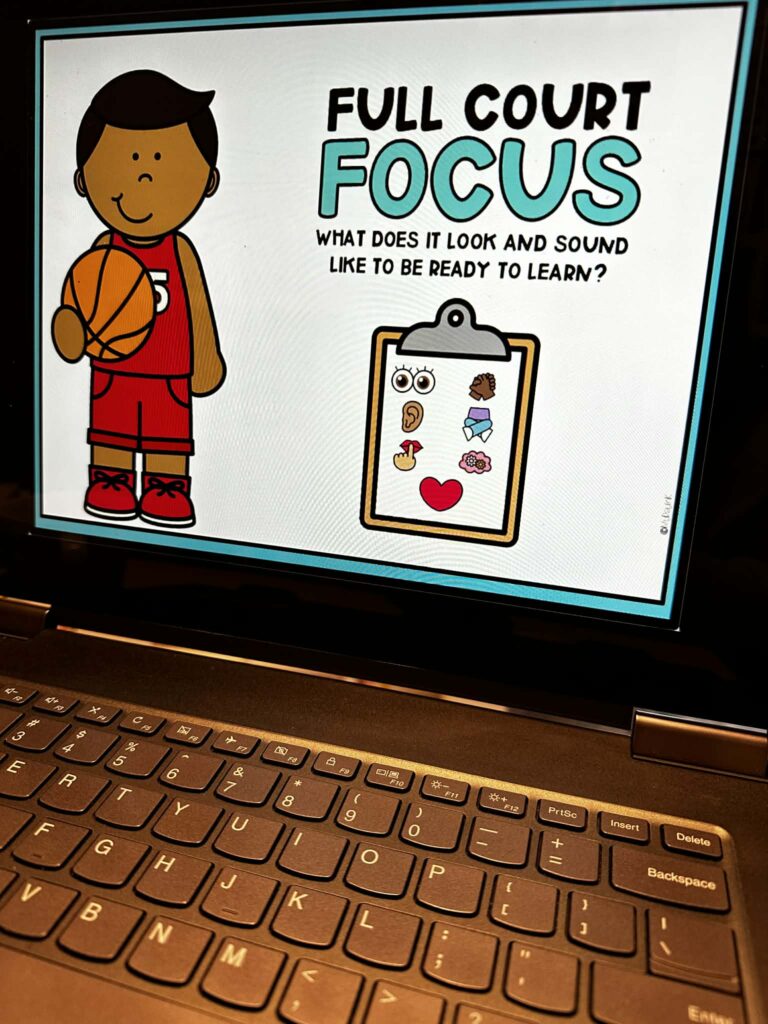
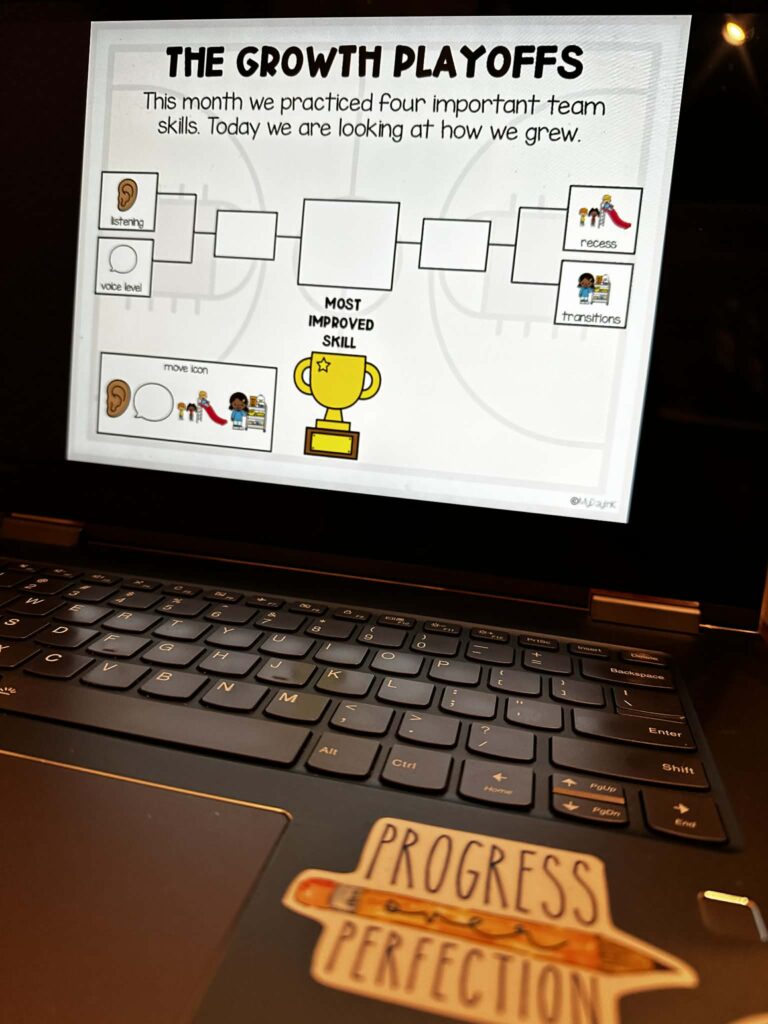
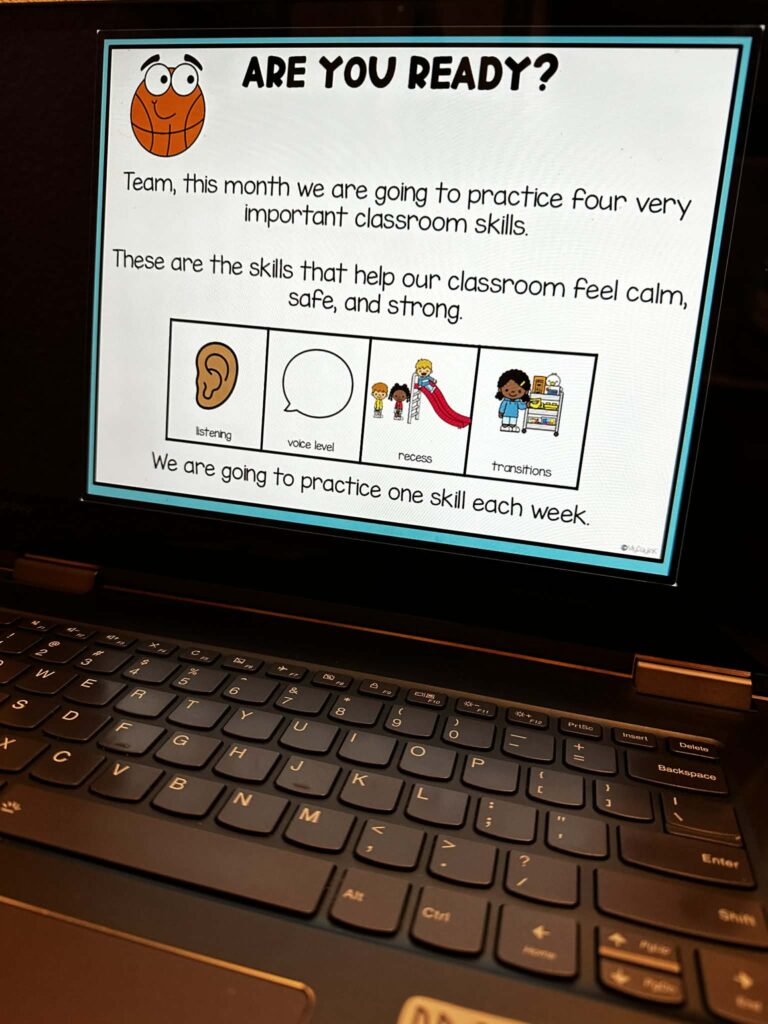
The March behavior reset slide deck that many teachers use includes visual scenarios designed specifically for K–1 classrooms.
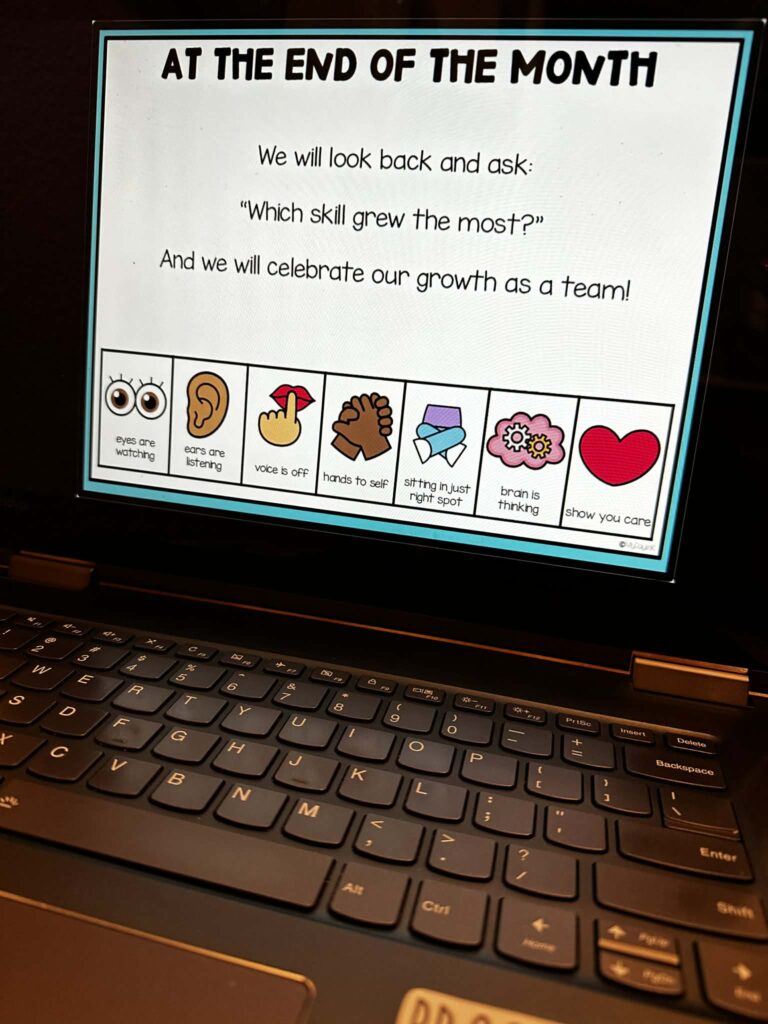
The slides show:
- Strong vs. Weak Choices: Side-by-side images of students making appropriate and inappropriate decisions in real classroom situations (carpet time, lining up, independent work).
- Real School Settings: Hallway, classroom, and playground visuals so expectations feel realistic and relatable.
- Interactive Questions: Prompts like “Is this a strong choice?” to engage students instead of lecturing them.
- Clear, Simple Language: Age-appropriate wording that young learners can understand and repeat.
These types of visuals make abstract expectations concrete, which is essential for primary learners.
If your classroom feels slightly off lately, you probably don’t need a full behavior overhaul. You likely just need a consistent, embedded review.
When review becomes part of transitions, morning meeting, recess prep, and independent work — it stops feeling like “extra.”
It becomes protection.
Protection of your time.
Protection of your teaching flow.
Protection of your sanity.
And honestly? That’s worth 60 seconds a day.