Surviving December in Kindergarten: Simple Classroom Management Routines That Actually Work
If you’ve taught kindergarten for more than five minutes, you already know December hits different. There’s something about this month that turns even the most predictable routine into a “choose your own adventure” storyline. One moment, your kids are doing morning work beautifully, and the next, someone is crying because a class elf “looked at them funny.” December energy is magical, chaotic, and just a touch unhinged. It’s also the time of year when December classroom management quietly becomes your entire personality.
Between the schedule changes, holiday programs, spirit days, assemblies, candy canes, and the general sparkle of the season, students can go from calm to overstimulated faster than you can say “Please sit criss-cross.” And here’s the thing, it’s not their fault. They’re excited, routines shift constantly, and sensory overload becomes an everyday norm. That’s why revisiting your classroom routines isn’t just a good idea in December… It’s survival.
Thankfully, you don’t need to overhaul your entire classroom or turn into Super Teacher. A few simple resets and clear routines can make a huge difference. Let’s break down what’s going on in December behavior-wise and how to bring the calm back into your kindergarten world, even if everything around you feels like peppermint-flavored chaos.
Why December Behavior Takes a Dip
December is a unique blend of excitement, anticipation, and overstimulation. Students are counting down to holidays, breaks, and special events. Their routines start to shift—not always dramatically, but enough that it throws off their internal sense of structure. Kindergarteners thrive on predictability, and December is famously unpredictable.
There are costume days, craft days, sing-alongs, extra visitors, and substitute teachers sprinkled throughout the month like confetti. The classroom looks different, sounds different, and feels different. Even the smell of cinnamon-scented air freshener can set someone off. Add in the fact that daylight ends at 4:30, and everyone is tired? December behavior dips aren’t surprising—they’re inevitable.
Understanding the “why” behind the chaos helps you approach student behavior with more empathy and less frustration. And once you see it through that lens, it becomes easier to decide where your classroom routines need shoring up.
The Top 3 December Classroom Management Routines
This is not the time to invent brand-new systems or add twenty new holiday centers. December is the month for strengthening the routines kids already know. You’re refreshing, not reinventing.
1. Strong vs. Weak Choices
This is your behavior anchor. In December, kids benefit from having very clear examples of what strong choices look like—especially when their impulse control is competing with holiday excitement. Instead of giving broad reminders like “Make good choices,” break it down for them.
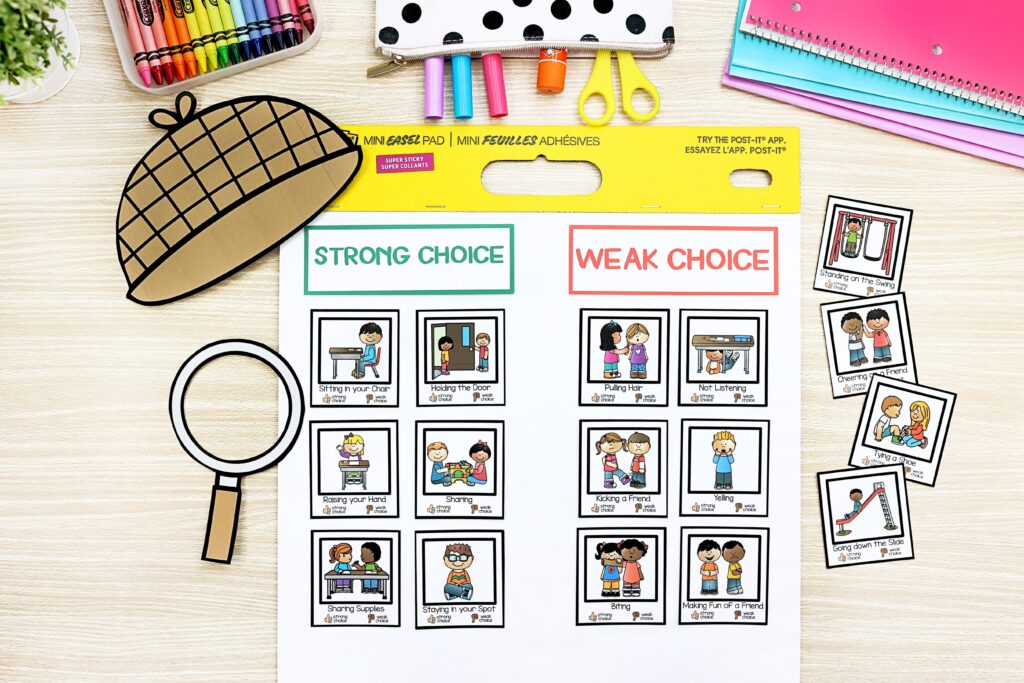
You might remind students what listening bodies look like, how hands and feet stay calm even when spirits are high, and what it means to show kindness when everyone is buzzing with energy. December strong choices will look a little different than August strong choices, and that’s OK. Be specific, model them dramatically, and revisit them daily.
2. Voice Levels
Voice levels in December are… ambitious. Students often jump straight to their “outside voice” without realizing it. Even your quietest student may suddenly sound like they’re cheering for their favorite basketball team.
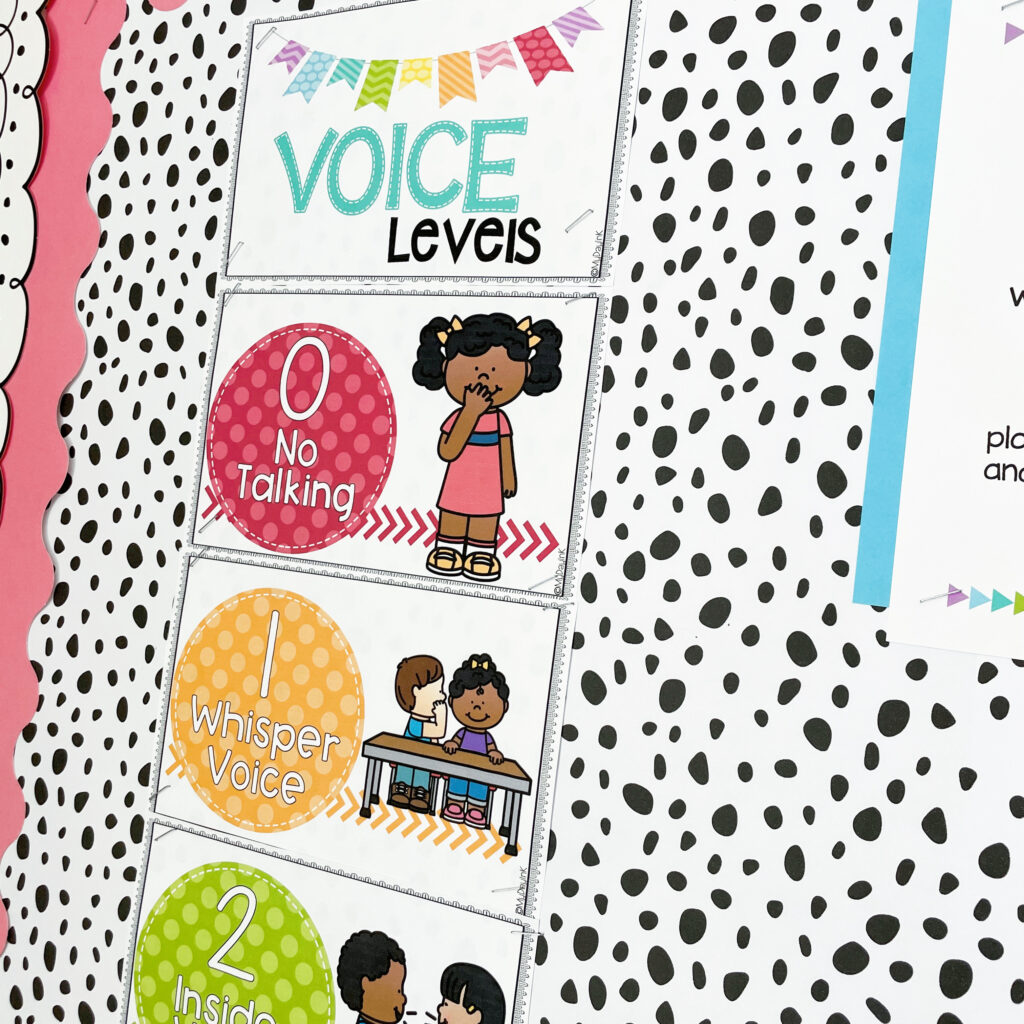
That’s why December is the perfect time to reteach voice levels, slowly, clearly, and with lots of modeling. Practice them in real-life contexts again. Turn it into a game or role-play different scenarios. Remind students how voice levels help everyone feel calm and safe, especially when there’s so much excitement swirling around.
3. Center Expectations
Centers can go from peaceful to chaotic faster than glitter spreads across a carpet. December centers need a bit of love, nothing major, but a revisit to the basics. Students need reminders about how to rotate, how to share materials, what independent work time looks like, and what to do when they finish early.
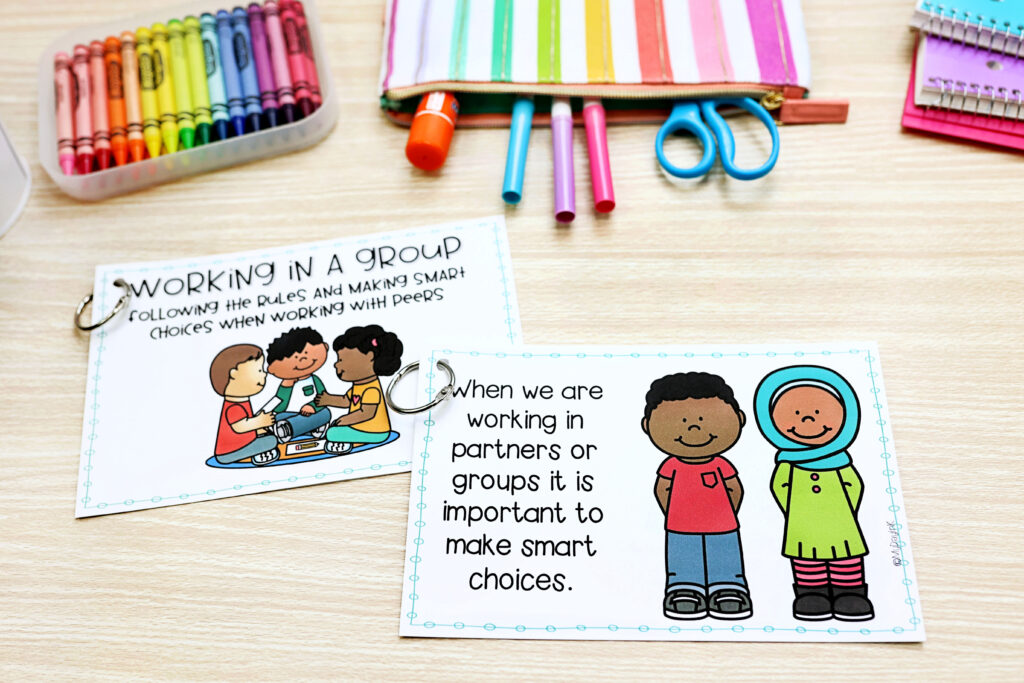
Centers in December tend to be extra engaging (hello, holiday-themed activities), which sometimes means students rush, skip steps, or “forget” how to clean up because tinseled distractions are everywhere. Taking a few minutes to review expectations can save you from spending your whole day saying, “Friends, we do NOT run to the art center.”
Using Visuals to Support Overwhelmed or Overstimulated Students
One of the best gifts you can give yourself in December is a classroom full of visuals. When kids are overwhelmed, overstimulated, or simply too excited to fully process your words, visuals step in and do the heavy lifting. They’re concrete, predictable, and accessible, even when emotions are running high.
Here are a few visuals that can truly transform your December management:
- Voice Levels Visuals:
When a child can see the voice level, it removes the guesswork. They don’t have to remember what a Level 1 or Level 2 is—the visual does that work. During December, when auditory processing can take a vacation, your voice level chart becomes a lifesaver. - Strong vs. Weak Choices Posters:
These help students identify the difference between helpful and unhelpful behavior in real time. When a student is overwhelmed, handing them a visual reminder often speaks louder than verbal redirection. It gives them a sense of control and helps them self-correct without feeling called out. - Line Expectations Charts:
December lines can get… wiggly. Pictures showing where hands should be, how bodies should look, and what their job is in line gives students instant clarity. Plus, it prevents the 20-minute “PLEASE FACE FORWARD” chant you didn’t know you’d be doing. - Center Cleanup Visuals:
When the excitement level is high, cleanup routines often go right out the window. Visuals showing step-by-step cleanup expectations keep students on track and reduce the “I didn’t know where it went!” conversations. - Calm-Down Strategy Cards:
December is a BIG month for big feelings, with overstimulation, excitement, and tired kiddos; emotions can snowball fast. Calm-down visuals remind students of their options: breathing, squeezing a stress ball, reading a book, visiting a quiet corner, or simply taking a break. These visuals make self-regulation more doable for young learners.
Visuals don’t replace your teaching; they reinforce it. In December, that reinforcement becomes essential.
How to Do a Mid-Year Reset (Without Overwhelming Yourself)
A mid-year reset sounds intimidating, but it doesn’t have to be. Think of it like a mini “first week of school,” except your students already know you, trust you, and understand your systems; they just need a refresh.
Start by choosing only a couple of routines to focus on. Don’t try to fix everything at once or reinvent your entire classroom. Pick the routines causing the most chaos and reteach them as if it’s day one. Keep it short, intentional, and repetitive. Practice daily. Celebrate wins, even small ones.
Doctors say the body resets itself overnight. Teachers know classrooms reset themselves through repetition and visuals. Consistency will carry you in December more than any other month.
Teacher Survival Tips for December
Here’s the truth: you don’t need to be extra in December. You just need to be intentional. Keep your routines simple, your schedule predictable, and your visuals plentiful.
Plan activities that are hands-on but not overwhelming. Leave buffer time for transitions. Give yourself permission to simplify. Build in brain breaks and movement opportunities. And remember: it’s not about creating a Pinterest-perfect holiday classroom—it’s about preserving your sanity and meeting your students where they are.
Your goal is to make it through the month with structure and joy intact, not to win “Most Festive Classroom of the Year.” Keep everything visual, predictable, and anchored in routines, and you’ll feel the difference immediately.