A Simple Way to Build Empathy in Your Classroom (Without Adding More to Your Plate)
Teaching social-emotional skills and bringing empathy in the classroom can feel like one more thing on an already overflowing to-do list. You want students to be kind, understanding, and emotionally aware… but do you actually teach those skills consistently? That’s the hard part. Between behavior, academics, transitions, and everything else, empathy often becomes something we talk about instead of something we intentionally practice.
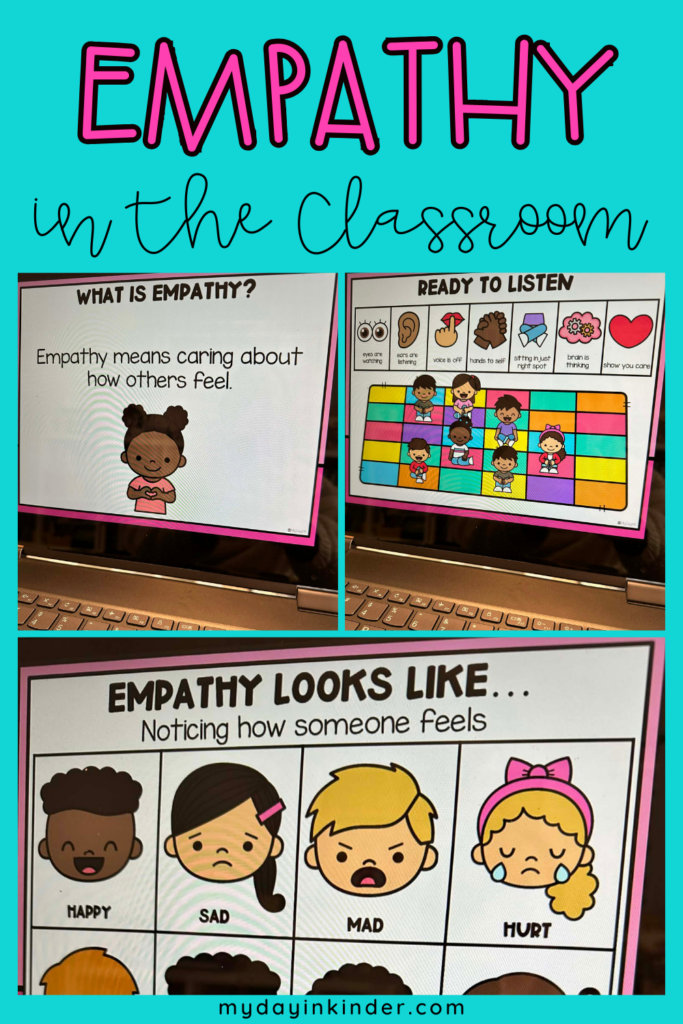
That’s why resources that are ready to use (and actually designed for real classrooms) make such a difference. The Management Made Simple Club was created for PreK–2 teachers who want calm, connected classrooms, and a big part of that comes from supporting students’ social-emotional growth. Each month includes an SEL toolkit with visuals and activities focused on skills such as empathy, emotional awareness, and self-regulation, without requiring hours of planning or preparation.
Instead of guessing how to teach empathy, you’re given practical tools like slides, role-play cards, and guided activities that make it easy to model and practice with students.
Why Empathy Is So Important in the Classroom
Empathy in the classroom is one of those skills that impacts everything. When students learn to understand how others feel, they:
- handle conflicts better
- build stronger friendships
- become more cooperative learners
- feel safer and more connected at school
And honestly? Classrooms run more smoothly when kids can recognize emotions in themselves and others.
Empathy isn’t just about “being nice.” It’s about helping students pause, notice feelings, and respond thoughtfully. When this becomes part of classroom culture, behavior shifts from reactive to reflective.
What the Empathy Resources Look Like
Inside the membership’s SEL toolkit, teachers get ready-to-use materials that connect directly to everyday classroom situations. These aren’t theoretical lessons; they’re designed for real moments kids experience.
Some examples include:
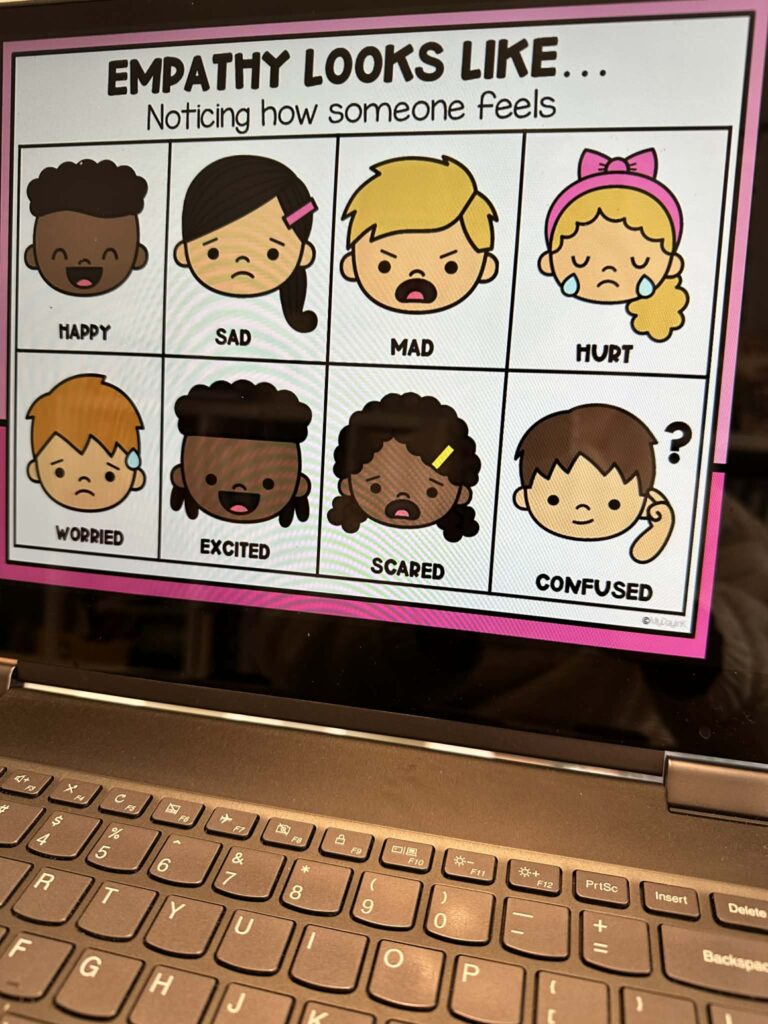
- empathy slides to guide class discussions
- role-play cards to practice real scenarios
- visuals that help students identify feelings
- activities tied to routines and expectations
These tools are created to help students build emotional awareness and understanding while reinforcing classroom expectations at the same time.
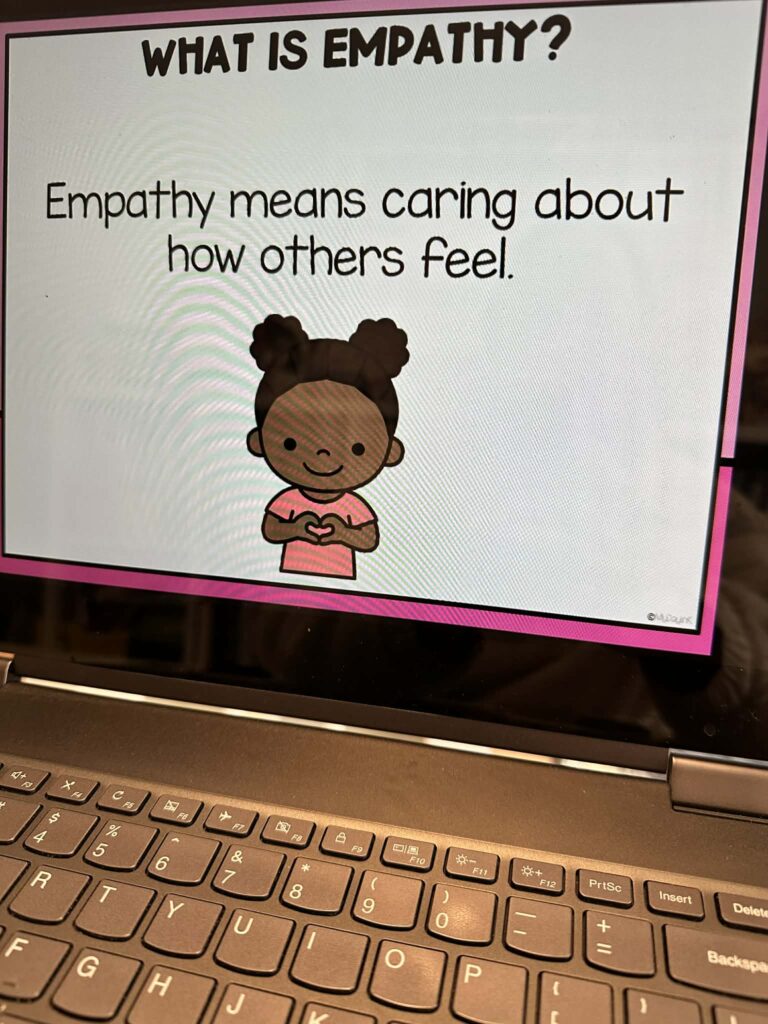
That means you’re not teaching empathy in isolation; it’s woven into your daily classroom life.
Easy Ways to Incorporate Empathy Activities
You don’t need a full SEL block to make empathy part of your classroom. Small, consistent moments work best.
Here are simple ways teachers can use empathy tools:
- Morning meeting conversations: Use slides or prompts to talk about feelings and situations students might face that day.
- Role-playing real scenarios: Pull out empathy cards during social conflicts, transitions, or partner work challenges.
- Reflecting on incidents: Instead of only correcting behavior, guide students to ask, “How did the other person feel?” What could we try next time?
- Connecting to literature: Pause during read-alouds to discuss character emotions and choices.
- Modeling language: Use phrases like: “I noticed how you helped…” “How do you think they felt?” “What would make this better?”
When empathy becomes part of routines, it stops feeling like an extra lesson and starts becoming classroom culture.
Supporting Students and Teachers
One of the biggest challenges teachers face is supporting students emotionally while managing their own stress. The membership recognizes that both matter. In addition to student resources, teachers receive reflection tools, affirmations, and calming supports to help maintain balance and consistency.
Because a regulated teacher creates a regulated classroom.
Building a More Connected Classroom
Empathy doesn’t develop overnight. It grows through modeling, practice, and repetition. When students consistently see, hear, and practice empathy, it changes how they interact with each other—and with you.
The biggest win?
You start seeing fewer reactive behaviors and more thoughtful responses. Students begin solving problems, supporting classmates, and recognizing emotions on their own.
And that’s when the classroom starts to feel calmer, more connected, and honestly… easier to manage.
If you’ve ever wished for simple, realistic ways to build social-emotional skills without reinventing your classroom systems, empathy-focused tools make a huge difference. Having slides, role-play cards, and ready-to-use activities removes the guesswork and helps you teach empathy in ways that stick.
Because when kids learn to understand each other, everything else, from behavior to collaboration, gets a little bit easier.