Activities to Use When Reinforcing Expectations
The first weeks of school are all about building routines. But even after the novelty wears off and things start to settle, maintaining expectations is an ongoing process. Instead of taking time away from academics to reteach behavior, why not blend it into your daily learning? Classroom management doesn’t have to be separate from your instruction. In fact, some of the most effective strategies involve reinforcing expectations while students are actively engaged in meaningful activities. With a few thoughtful tweaks, your centers, visuals, and class structure can do double-duty, supporting both learning and behavior.
Here are a few practical ways to keep expectations front and center… without stopping your momentum.
1. Use Math Centers to Reinforce Group Work Expectations
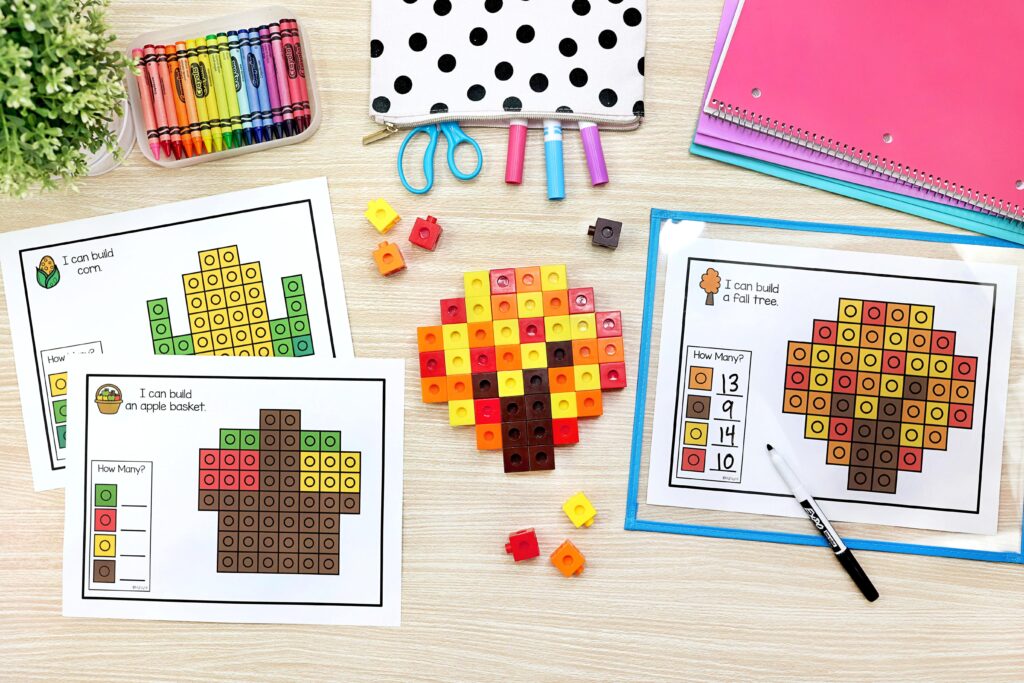
Math centers are the perfect environment to teach and reinforce collaboration, independence, and responsibility. Whether you’re working on counting, addition, patterns, or place value, small group stations are a great way to observe (and model) what effective group work looks like.
Before jumping in, take time to:
- Model center behaviors: what to do, how to speak to a partner or our group, how to clean up
- Practice rotations without the academic task first
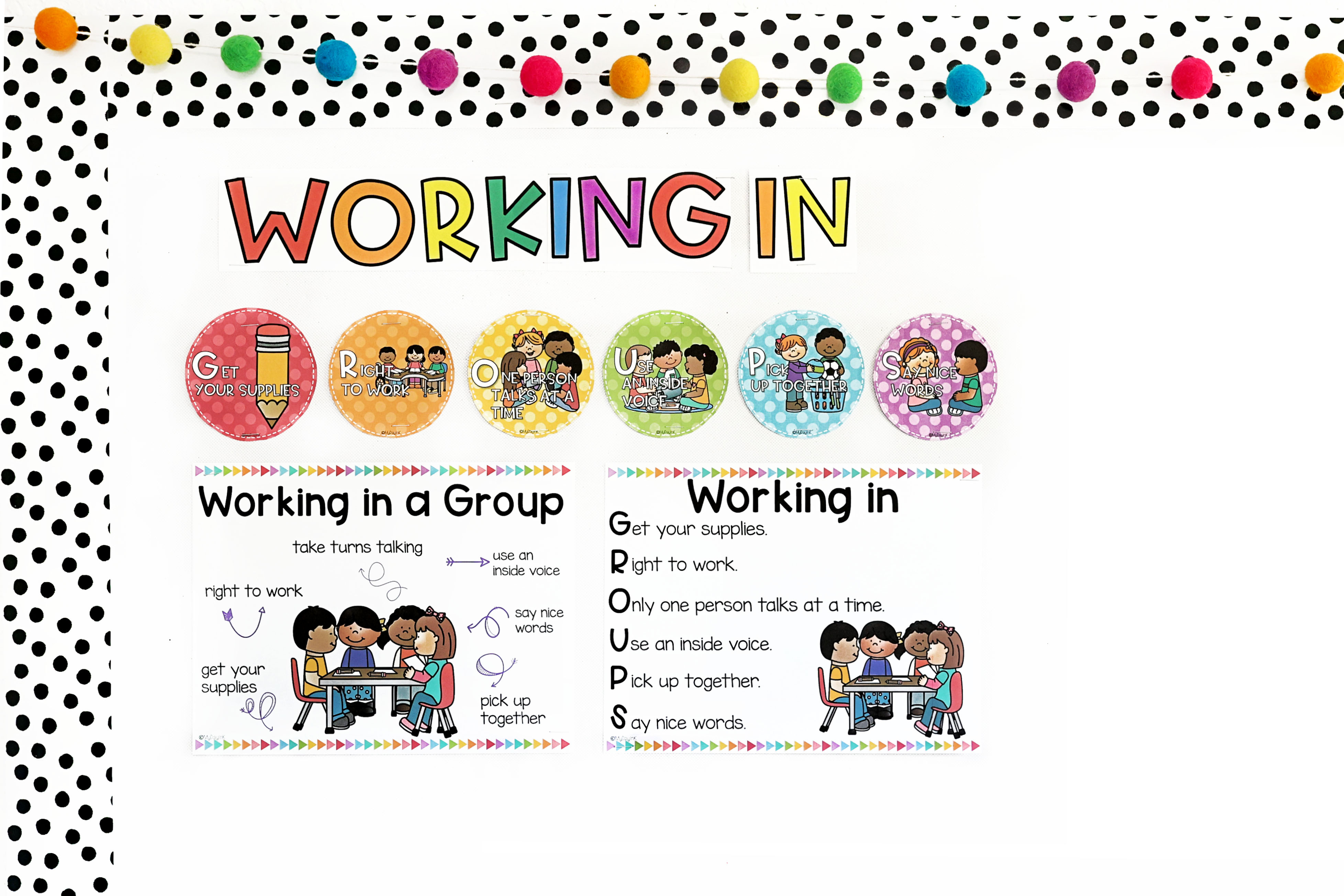
- Review your anchor chart for group work expectations (“We take turns,” “We stay in one spot,” “We solve problems kindly”)
Add roles to boost accountability, such as:
- Material Manager – grabs and returns supplies
- Time Tracker – watches the timer and lets the group know when it’s time to switch
- Team Leader – helps with directions and keeps the group on task
These little routines help students internalize what it means to work together, without constant reminders from you.
2. Introduce or Refresh Class Jobs
Class jobs build responsibility, ownership, and community, and they’re a powerful tool for reinforcing expectations. If you haven’t introduced jobs yet, now’s the time. If you have but students are losing steam, reintroduce them with fresh energy.
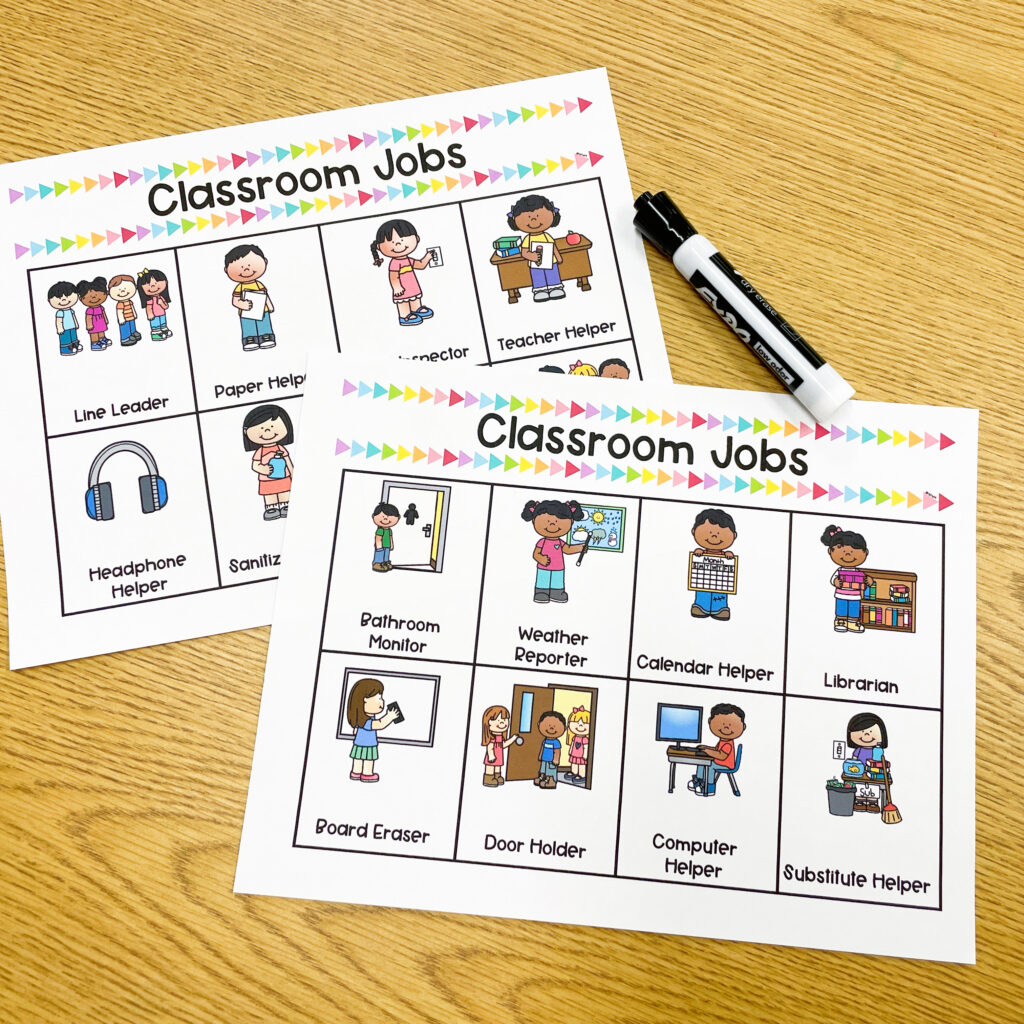
Start with a simple chart showing each role and a short explanation. Reinforce the expectations for how each job is performed, and connect it to classroom values:
- Helping the class stay clean = respect
- Passing out materials on time = responsibility
- Greeting classmates each morning = kindness and inclusion
Rotate weekly or bi-weekly, and schedule a short “job meeting” each Monday to go over responsibilities. You can even allow students to “apply” for jobs once they understand them.
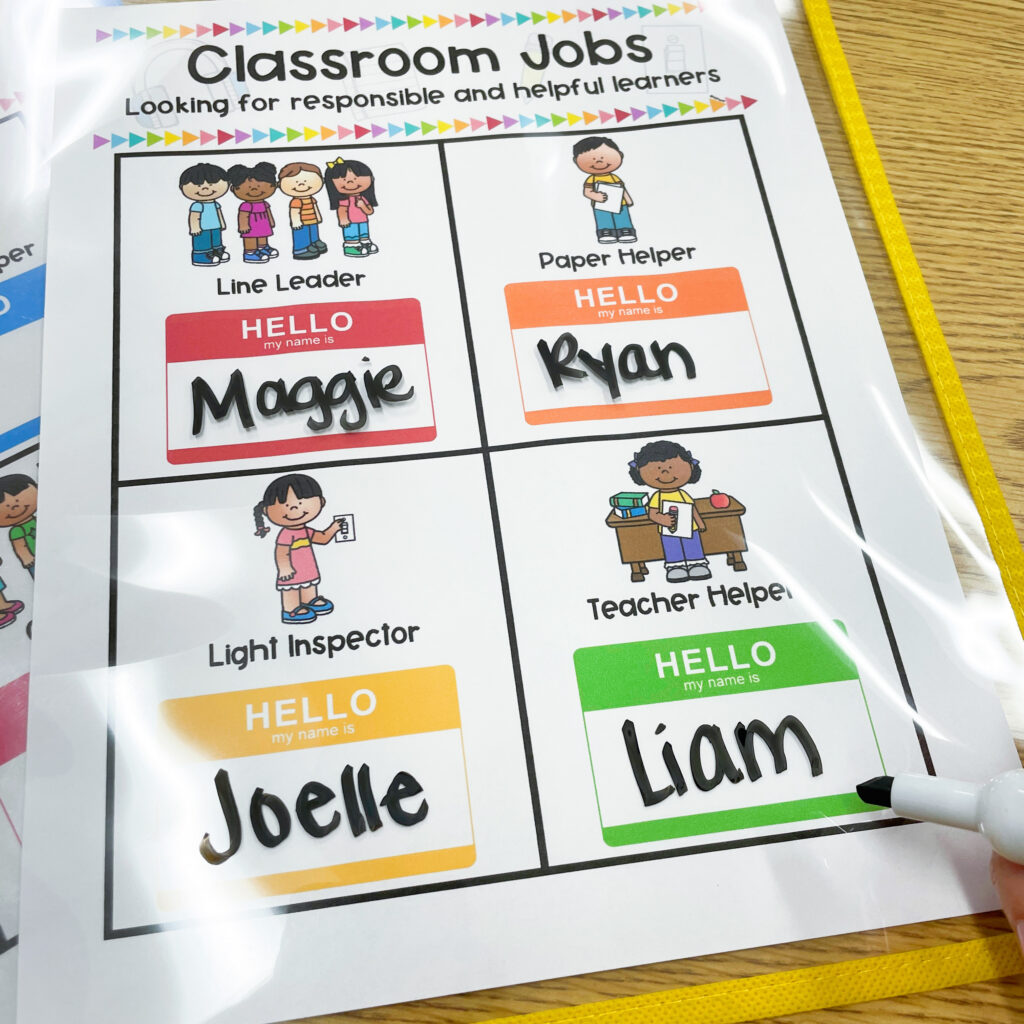
When jobs are part of your classroom culture, students feel invested—and behavior naturally improves.
3. Use Visuals to Keep Expectations Front and Center
Students thrive when they know exactly what’s expected and visuals help make those expectations stick.
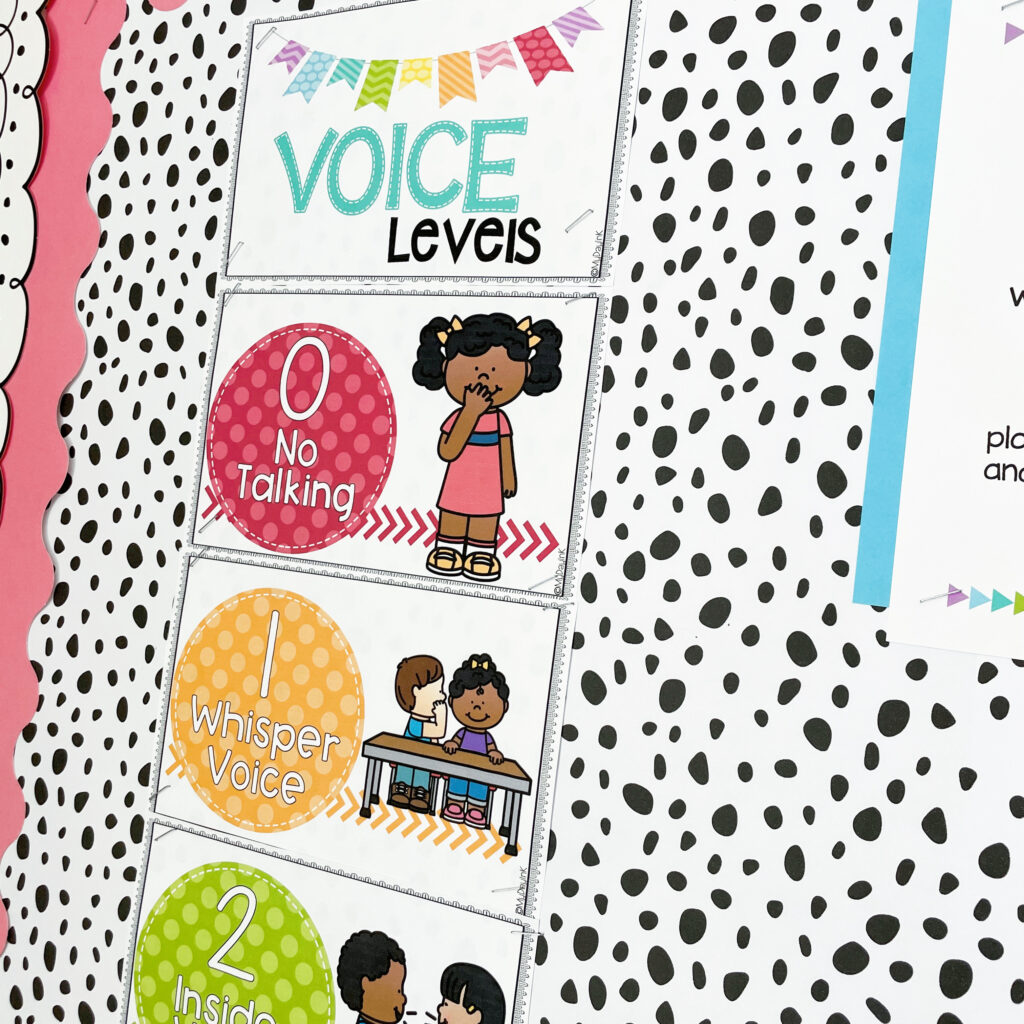
When reinforcing expectations, try updating or creating:
- Voice level charts
- Transition visuals (what it looks like to move from carpet to desk)
- “What do I do when I’m done?” posters
- Calm corner visuals or self-regulation prompts
Visuals are especially powerful for younger learners, students who are neurodivergent, or those who are still developing language skills. They also serve as gentle, non-verbal reminders throughout the day, so you’re not repeating yourself 47 times before lunch.
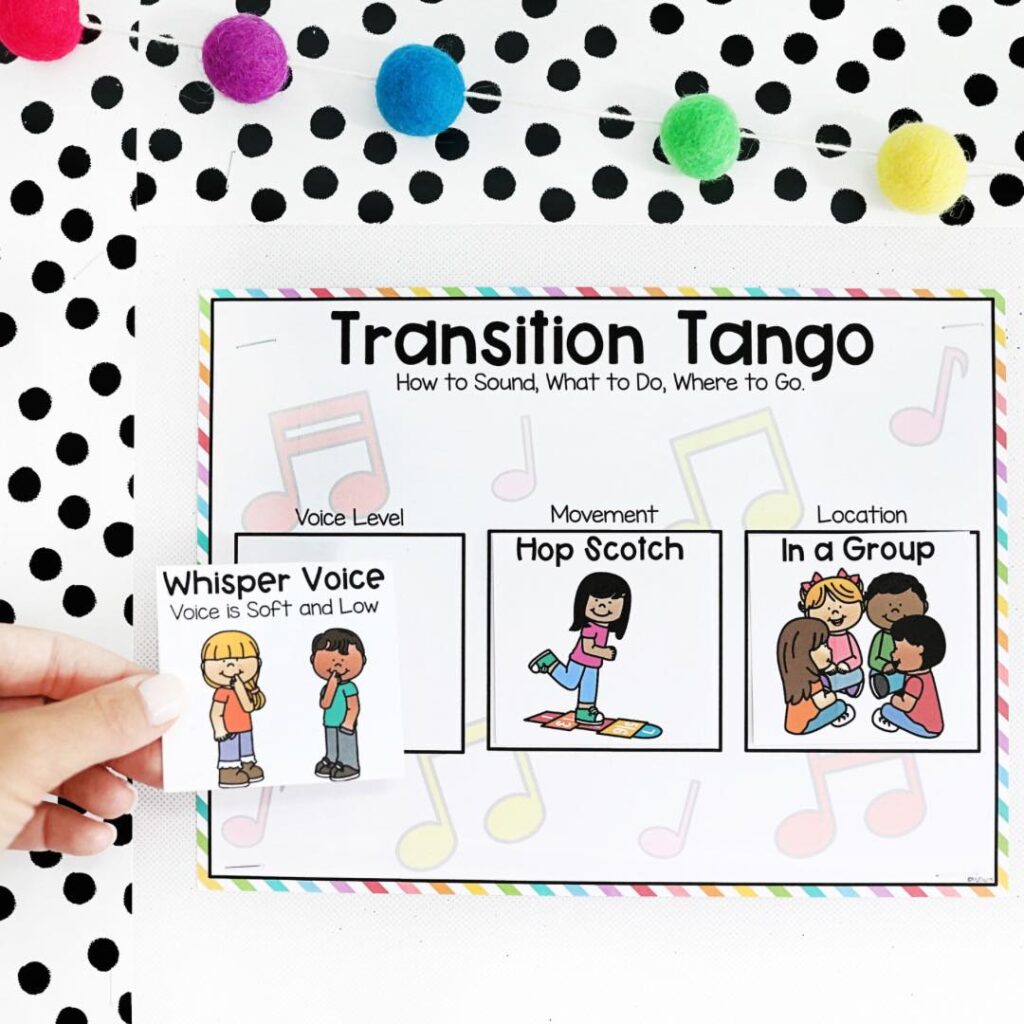
Take a few minutes to walk your class through the meaning of each one. Ask students to role-play the “right way” and “oops way” to follow them, then reinforce them consistently in your routines.
4. Use Writing Prompts to Revisit Behavior and Social Skills
Academic work doesn’t have to be separate from classroom management. In fact, writing about behavior helps students reflect and grow.
Use short, purposeful prompts that allow students to think about how they contribute to the class community:
- “How can I be a good partner?”
- “What do I do when I feel frustrated?”
- “What makes our class a safe and kind place?”
- “What are ways I can show respect to our materials and space?”
You can use these prompts during morning work, after read-alouds, or as part of your writing block. Invite students to share responses, or turn them into a class book or display to refer back to throughout the year.
Keep Expectations Alive All Year Long
It’s easy to think, “They should know this by now.” But students need constant reinforcement, especially when it comes to routines and behavior. The good news is, you don’t have to interrupt your day to reteach expectations. With just a little creativity, your daily instruction can double as behavior support.
By using engaging activities to reinforce routines, you’re not only building strong academic skills—you’re also teaching kids how to be part of a respectful, responsible classroom community.
FAQ: Reinforcing Expectations Through Daily Activities
Q: How often should I revisit classroom expectations?
A: Revisit them as often as needed, especially after long weekends, schedule changes, or when student behavior starts to slide. Short refreshers woven into your day can go a long way.
Q: What if my students already know the rules?
A: Great! But knowing and consistently following are two different things. Reinforcement helps make behaviors automatic and keeps your classroom running smoothly.
Q: Can I use these ideas with older students?
A: Absolutely. While some visuals and routines may need tweaking, the concept of reinforcing expectations through real classroom work applies from K to middle school.
Q: How do I fit this in without losing instructional time?
A: You don’t need extra time—just thoughtful planning. Use current activities (like centers or writing prompts) as opportunities to model, practice, and reflect on behavior expectations.
Q: What visuals or tools work best for supporting behavior?
A: Visual schedules, calm corner guides, voice level charts, and “what to do when I’m done” posters are all great options. Choose tools that match your students’ needs and classroom routines.
Q: Where can I find ready-made visuals and support materials?
A: My First 25 Days™ course includes printable visuals, routines, and classroom systems that help you teach and reinforce expectations all year long. Check it out here!
