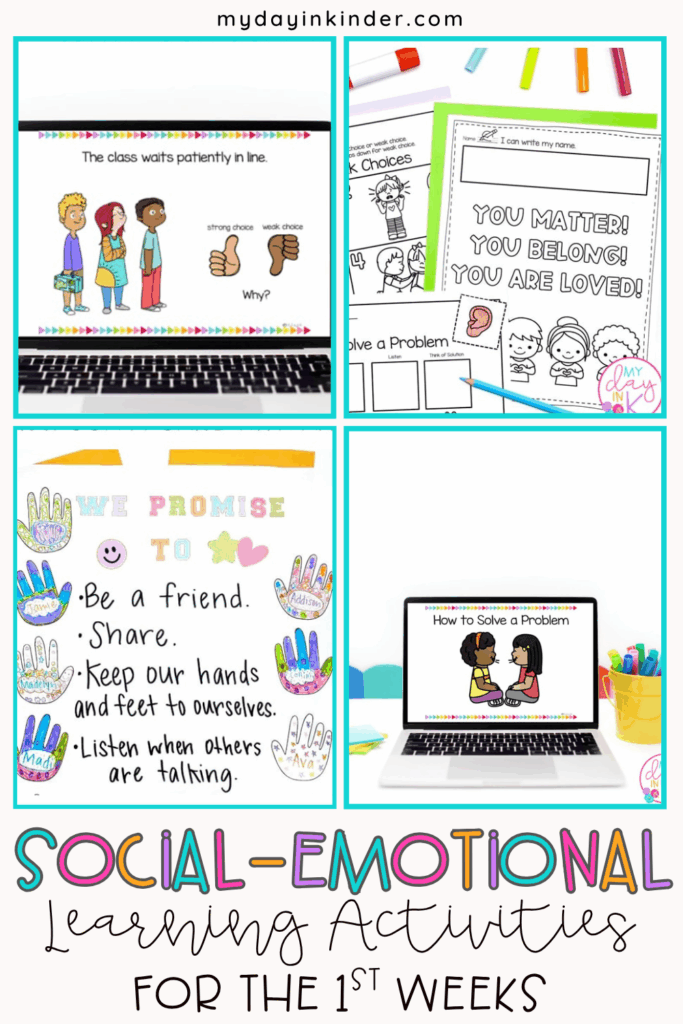
Social-Emotional Activities for the First Weeks of School
The first few weeks of school aren’t just about teaching math facts, phonics rules, and how to line up without pushing. They’re about building a classroom community where students feel safe, connected, and ready to learn. When we intentionally focus on social-emotional learning activities (SEL) at the start of the year, we help students build the skills to navigate friendships, manage big feelings, and problem-solve together. Those first days are when we set the tone, will our classroom be just a place for learning, or will it be a family where students look forward to coming every day?
One of my favorite tools for kicking off the year is the Back-to-School Procedures & Routines Slides | Community Building Activities. It’s packed with interactive slides, routines, and SEL prompts that make building your classroom family feel natural, not forced.
Here’s how you can use it (and a few extra ideas) to help your students start the year strong with some social-emotional learning activities.
1. 30 Days of Digital Slides to Practice Procedures
Procedures aren’t just classroom rules; they’re the backbone of a calm, predictable classroom. The beauty of this slide set is that it allows you to revisit expectations daily in a fun, interactive way, rather than just telling students what to do.
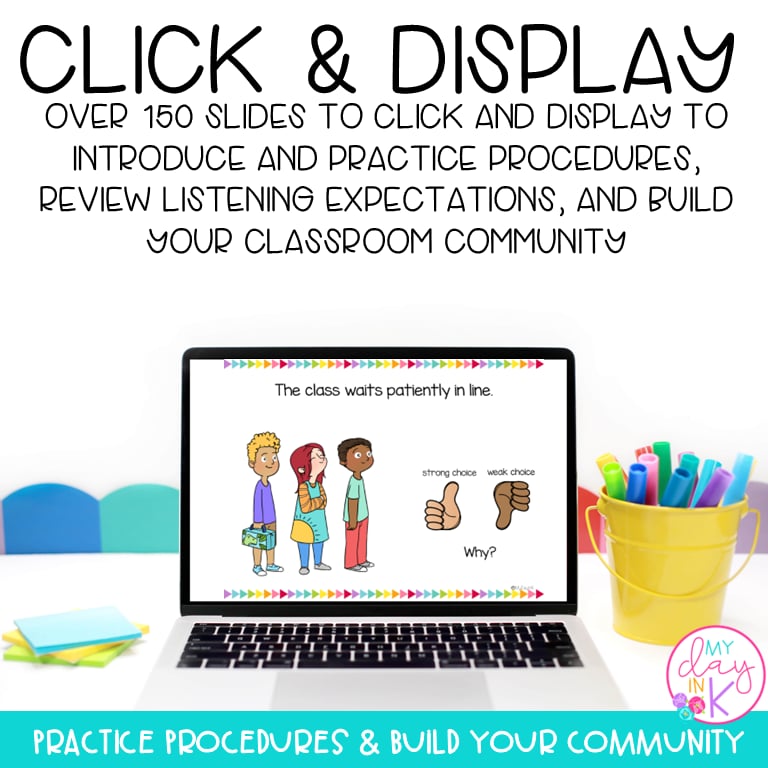
Each day, the slides blend practical routines (like how to line up or use supplies) with SEL discussions, so students are learning how to do things while also talking about why those choices matter for the group.
2. Name Practice
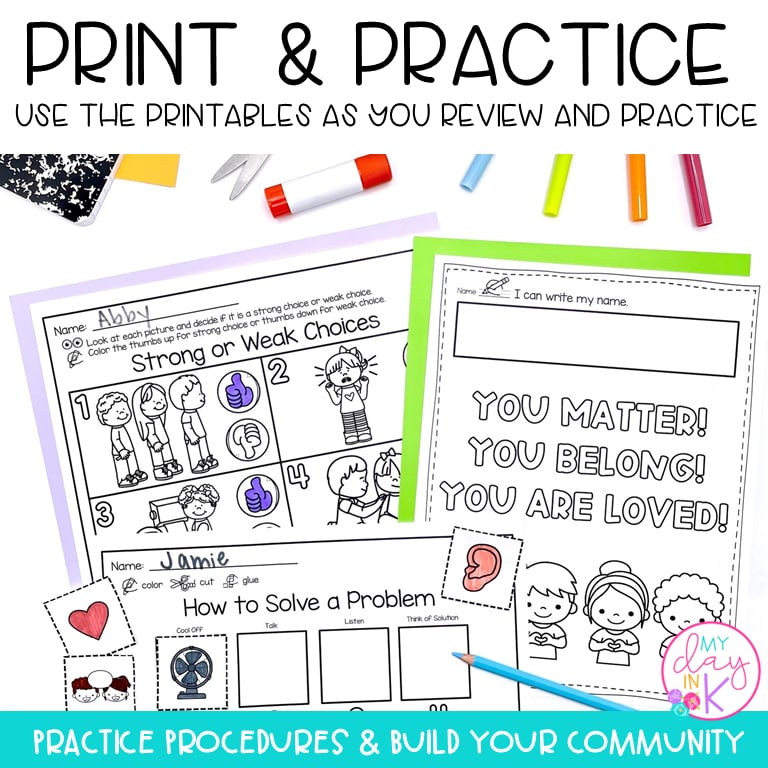
It may sound simple, but spending intentional time on name activities builds confidence and belonging right away. Whether it’s practicing writing names, learning classmates’ names, or playing name-based games, these activities communicate one important thing: “You matter enough for us to know and say your name correctly.”
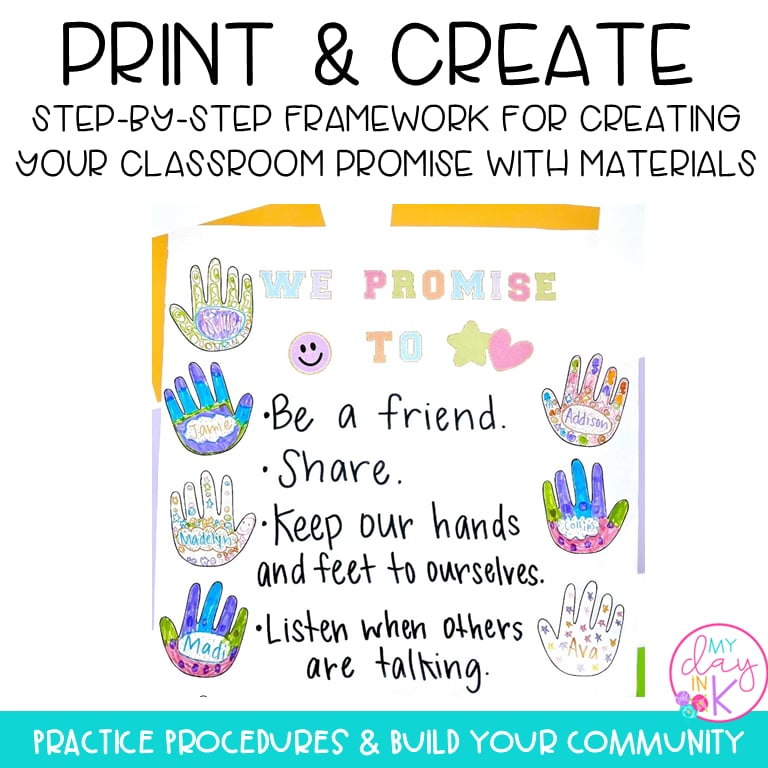
3. Setting Up Your Classroom Promise Framework
Instead of handing out a list of rules, involve students in creating a Classroom Promise. The slides guide you through discussing what kind of classroom everyone wants, brainstorming behaviors that will help make it happen, and writing it up together. Post the promise on your wall and revisit it often; it becomes the heart of your classroom culture.
4. Student of the Day Game
Spotlighting one student each day builds self-esteem and helps classmates get to know each other. The Student of the Day might answer fun questions, share “My Favorite Things,” or lead a short activity. Over time, this tradition turns into a celebration of each individual in your classroom community.
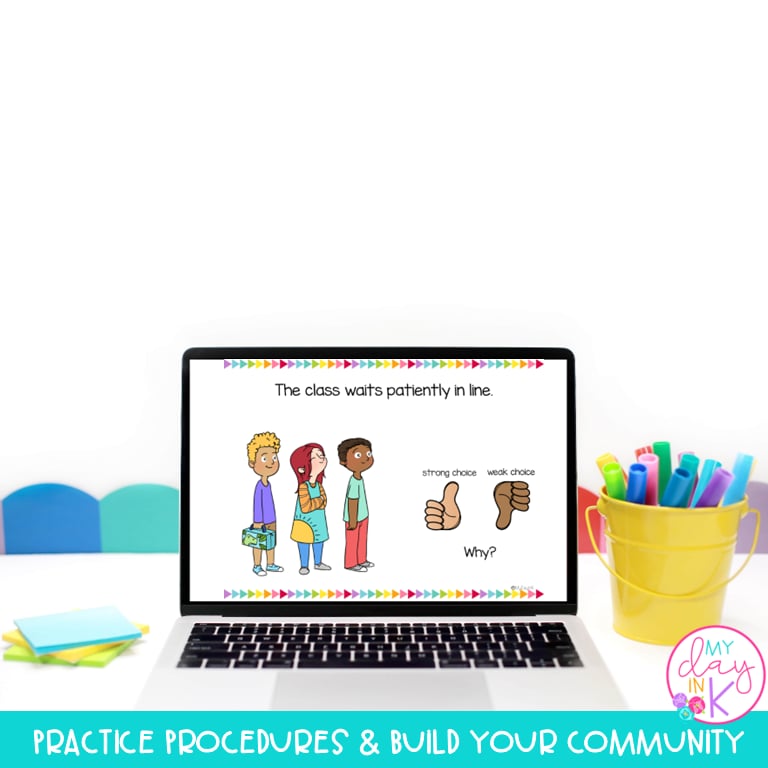
5. Strong and Weak Choices
Students learn best when they see examples, both good and bad. In this activity, you show scenarios and have students decide whether it’s a “strong choice” or a “weak choice.” These conversations help them connect actions to consequences and understand that everyone has the power to make better decisions.
6. Emotions & “How Are You Feeling” Scenarios
Recognizing and naming emotions is a foundational SEL skill. The slides use real-world examples (“How would you feel if…?”) to help students identify feelings in themselves and others. This makes it easier for them to express emotions appropriately instead of acting them out through behavior.
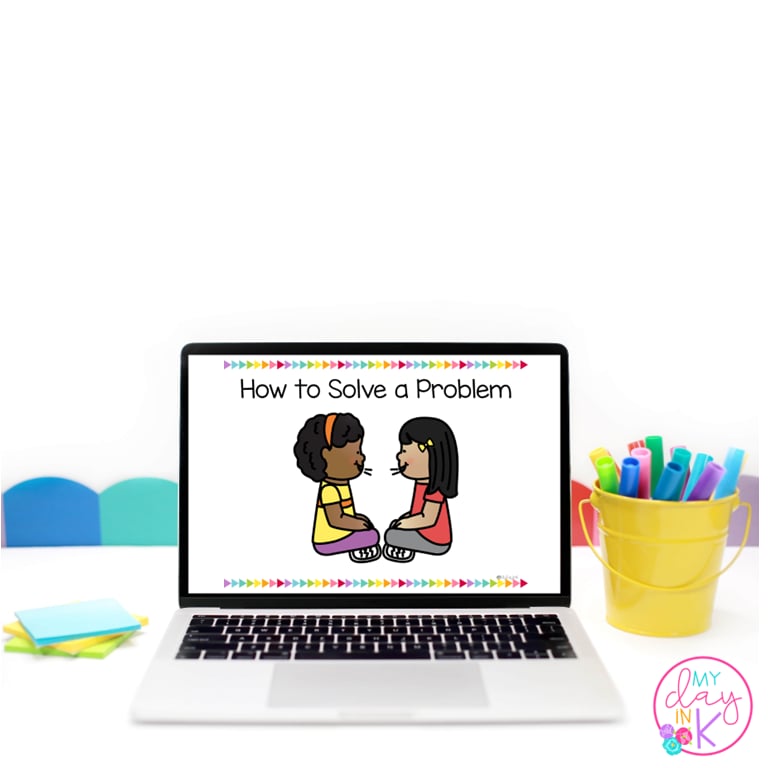
7. How to Solve a Problem
Conflict will happen, especially in the first weeks. These slides walk students through problem-solving strategies and then give them scenarios to practice. You can model steps like staying calm, listening, brainstorming solutions, and making a choice together. The more they practice in a low-stress setting, the better they’ll handle real issues later.
8. Kindness & Friendship Lessons
Relationships take effort, practice, and ongoing attention, especially for young learners who are still figuring out how to navigate social interactions. Kids benefit immensely from clear, explicit instruction on what it means to be a good friend, how to show kindness, and how to handle challenges in relationships. The slides cover important topics like:
- How to be a Friend
- What Makes a Good Friend
- Kind/Unkind Scenarios
- How to Fix a Mistake
These lessons normalize apologizing, making amends, and speaking up for yourself or others.
9. Speak Up & Ways to Say “Hi”
Some kids naturally jump into conversations; others hang back. Teaching friendly ways to greet and speak up builds social confidence. You can even turn it into a class challenge: “Say ‘hi’ to five different people today!”
10. Manners & “What Does It Look/Sound Like?” Scenarios
Manners might seem old-fashioned, but they’re really just respect in action. These activities show what good manners look like and sound like in the classroom, cafeteria, and playground. Students get to practice role-playing so they can apply manners in real life.
10. Speak Up & Ways to Say “Hi”
Some kids naturally jump into conversations; others hang back. Teaching friendly ways to greet and speak up builds social confidence. You can even turn it into a class challenge: “Say ‘hi’ to five different people today!”
11. When I’m Feeling Blue
This is a powerful activity that helps students identify what they can do when they’re feeling sad or upset. Whether it’s talking to a friend, using a calm-down strategy, or visiting the peace corner, they leave with a personal toolbox for emotional self-care.
12. Our Classroom Community
After the first couple of weeks, check back in to reflect on your progress. Have students talk about what’s working, what challenges they’ve faced, and how they feel about being part of the group. Use the printable pages from the resource to reinforce routines and expectations so they stick all year long.
FAQ: Social-Emotional Activities at the Start of School
Q: How much time should I spend on SEL activities each day?
A: Even 10–15 minutes in the morning can make a huge difference. You can also sprinkle SEL into transitions, group work, and end-of-day routines.
Q: What if my students don’t want to share during discussions?
A: Give them the option to “pass” or share in a smaller group. Over time, trust will grow, and participation usually increases.
Q: Can SEL activities be academic too?
A: Absolutely! Many SEL prompts can be paired with reading, writing, or speaking goals, so you’re hitting multiple standards at once.
Q: What if I feel behind on academics?
A: Strong SEL skills actually help students learn more efficiently. Taking time to build community early often means fewer behavior issues and smoother lessons later.
Q: How can I involve parents in SEL?
A: Share the prompts you’re using in class in your newsletter so families can continue the conversations at home.
By combining SEL with practical classroom routines, you’re teaching students how to succeed academically and socially. The Back-to-School Procedures & Routines Slides | Community Building Activities resource makes it easy to build those skills without feeling like you have to plan separate social-emotional learning activities every day; it’s all woven together naturally.