Why Morning and Afternoon Routines Matter in the Classroom
If you’ve ever had a chaotic start to the school day, you know how it sets the tone for everything that follows. The same goes for dismissal, when the end of the day feels scattered and rushed, students leave with stress instead of confidence. Morning and afternoon routines aren’t just about keeping things orderly; they’re about helping students feel safe, focused, and ready to succeed.
Let’s break down why morning routines (and afternoon routines) are essential, what they can look like, and how you can set them up to make your classroom run more smoothly.
Why Routines Are Important
Children thrive on predictability. Think about how much easier life feels when you know what to expect. Kids are the same way. Routines give them a sense of security and help them feel grounded from the moment they walk in the door. When students know the flow of the day, they can focus less on worrying about what’s coming next and more on being present and ready to learn.
Routines also make daily transitions smoother. The shift from home to school in the morning (and from school back to home in the afternoon) can be overwhelming for young learners. Clear, consistent routines give students a mental roadmap, making those transitions less stressful and more successful.
Over time, routines help children build independence. When tasks like unpacking, turning in homework, or packing up at the end of the day become second nature, students gain confidence in managing themselves. You’ll notice fewer reminders are needed, and students take ownership of their responsibilities.
Another big benefit is that routines maximize learning time. Without them, precious minutes get lost in confusion or off-task behavior. With them, students spend less energy figuring out what to do and more energy actually doing it.
Ultimately, when your classroom begins and ends with consistent, structured routines, you’re not just keeping things organized. You’re building a calm, predictable environment where students and teachers alike feel less anxious and more prepared to thrive.
What Is a Morning Routine?
A morning routine is the set of activities students complete when they first arrive at school. It bridges the gap between home life and the classroom. Instead of rushing into academics right away, morning routines give students a chance to settle in, feel grounded, and prepare mentally for the day.
Examples of Morning Routine Activities:
- Unpack and organize: Hang up backpacks, put folders in bins, and get supplies ready.
- Morning greetings: A handshake, fist bump, or wave from the teacher helps build connection.
- Warm-up activity: A short journal prompt, morning message, morning tubs, or review worksheet.
- Calendar or morning meeting: Practice days of the week, weather, or share news.
- Mindfulness moment: A breathing exercise or quiet reflection to set the tone.
What Is an End-of-Day Routine?
An afternoon routine is just as important as the morning; it provides closure to the day and helps students transition back home. It ensures students leave with everything they need, both academically and emotionally.
Examples of Afternoon Routine Activities:
- Pack up materials: Homework, notes, and projects go into backpacks.
- Classroom jobs: Students clean up or reset areas for the next day.
- Reflection activity: A quick discussion, exit ticket, or gratitude circle.
- Dismissal practice: Calm, orderly transitions to buses, cars, or parent pick-up.
- Positive closure: A goodbye routine, such as a chant, song, or special send-off.
Activities That Can Be Part of a Routine
You don’t need to reinvent the wheel. Just a few consistent activities can create a sense of rhythm for your students. Here are some simple options:
- Check-in stations: Students move their name tag to show they’re present.
- Choice boards: Give students 5–10 minutes of quiet activities like reading, puzzles, or drawing while classmates arrive.
- Gratitude or reflection journal: Helps students build social-emotional awareness.
- End-of-day recap: Share “one thing I learned today” or “one thing I’m proud of.”
- Mindful movement: A stretch, breathing exercise, or song to start or end on a positive note.
Visual Support: Morning & End-of-Day Routine Visuals Resource
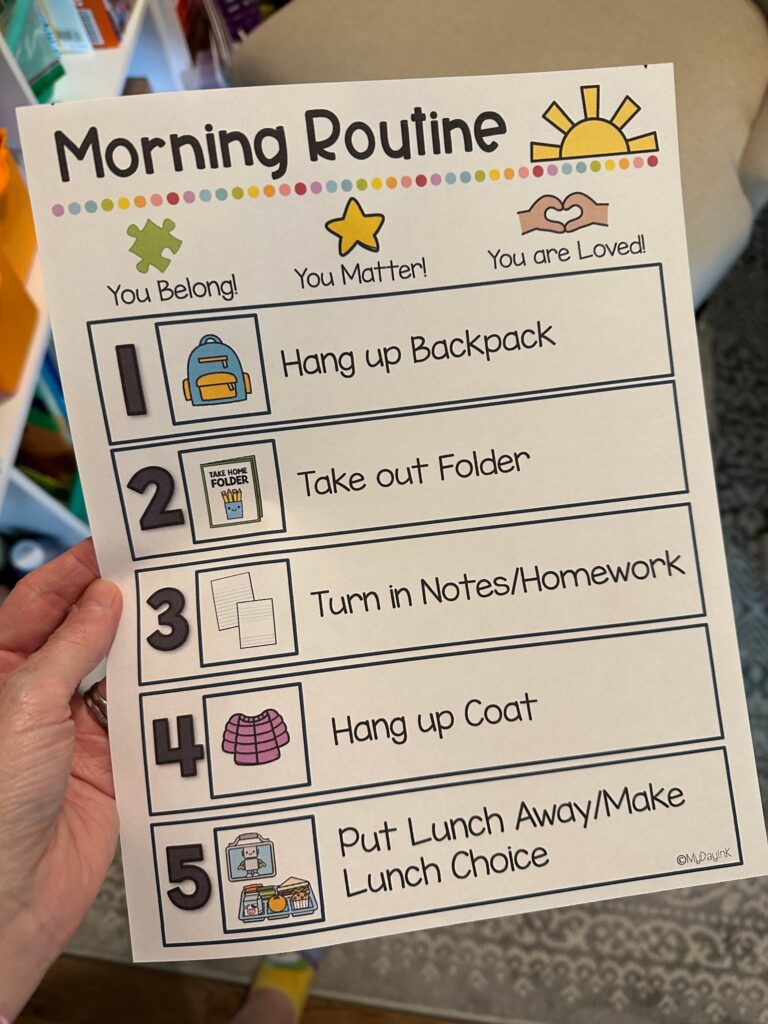
One exceptional tool to reinforce routines visually is the Morning & End of Day Routine Visuals resource, designed especially for Kindergarten and early primary classrooms. This customizable set of visual charts makes daily transitions smoother and more meaningful for young learners.
What Makes It Stand Out:
- Editable and Flexible: You can tailor the text to suit your classroom’s specific steps, and reposition or swap out clipart to reflect your routines.
- Multiple Layout Options: Choose from full-page visuals or smaller half-page charts, perfect for sharing at tables or placing individually at student desks.
- Supportive for Visual Learners: Each routine chart includes moveable visual prompts that guide early readers through the sequence of tasks.
- Positive Mindset Built In: Affirmations at the top of each chart encourage a positive start and reflective close to the day, fostering emotional well-being and a growth mindset.
How Teachers Love Using It:
- Promotes independence: Students can follow routines on their own, knowing exactly what comes next.
- Saves instructional time: By reducing repeated reminders, the visuals streamline transitions and keep kids on task.
- Especially beneficial for diverse learners: Teachers working with students on the autism spectrum, with learning differences, or emerging bilinguals consistently praise its clarity and ease of use.
Sample Use Case in Your Classroom:
Imagine the first bell rings, students enter, and see a brightly displayed morning routine chart with affirmations like “You belong here!” followed by “Unpack, Morning Message, Stretches, Morning Meeting.” Even if learners aren’t yet fluent in reading, the pictures guide them to settle in, launch into a greeting activity, and prepare mentally for the day.
At the end of the day, another chart gently reminds them of cleanup, reflection, packing up, and a final affirmation like “Great job today!” The consistent visual cues bring closure and calm to dismissal routines.
Morning and afternoon routines aren’t about filling time. They’re about creating structure and safety for your students. The predictability of these routines allows kids to focus more on learning and less on wondering what’s next. When students start and end their day with intention, the middle of the day flows much more smoothly.
Think of routines as bookends to your teaching day: one welcomes students in, the other sends them home with a sense of accomplishment. Both are equally important, and both make your classroom a place where kids can thrive.