Managing Springtime Wiggles in Kindergarten: Movement Breaks and Engaging Activities
If you’re a Kindergarten teacher, you already know that springtime brings a whole new energy to the classroom. The days are longer, the weather is warmer, and let’s be real—the kids feel it! It’s like they wake up one day with a whole new level of excitement, and suddenly, all the routines you’ve worked so hard to establish feel like they’re slipping away. If you’ve been thinking, “Why are my kids so wiggly right now?”—you are not alone! Today, we’re diving into the secret to calming those spring wiggles. We’ll talk about why behavior tends to shift this time of year, the best movement breaks to help kids refocus, and how to channel their energy into learning instead of classroom chaos.
Why Do Kindergarteners Get So Wiggly in the Spring?
Understanding why behavior shifts in the spring can help teachers respond with patience and effective strategies. Here are a few key reasons why kids seem to have more energy than ever.
More Daylight & Warmer Weather
As the days get longer and temperatures rise, kids naturally become more energetic. Increased sunlight boosts serotonin levels, making them feel more awake and active. After months of indoor play, they’re eager to move, explore, and be outside as much as possible. Even after recess, they may struggle to sit still because their bodies crave more movement, making it harder to focus on lessons.
Spring Fever is Real
By spring, the school year feels long, and routines that once felt fresh now seem repetitive. Kids start testing boundaries again, much like they did at the beginning of the year. With summer break approaching, they may become more distracted, rush through work, or lose focus more easily. The mix of high energy and dwindling motivation can lead to more off-task behavior, making classroom management feel like an ongoing challenge.
Anticipation of Big Changes
Spring brings major transitions, and for kindergarteners, the thought of moving on to first grade—or other upcoming changes—can create excitement and anxiety. Since young children often struggle to express these emotions, they may act out, become extra chatty, or seem more distracted. Even well-adjusted students can feel unsettled, making it essential to provide structure, reassurance, and plenty of movement breaks.
Movement Breaks That Actually Help Kids Refocus
Telling kids to “sit still” when they have the wiggles just does not work. Instead, we need to build in movement breaks that actually help them regulate their energy.
Brain Breaks with a Purpose: Quick, structured movement breaks between activities can make a huge difference.
- Freeze Dance
- GoNoodle or YouTube Dance Breaks
- Jump & Count (skip count or count by 10s while jumping)
Calm & Focus Breaks: Not all movement needs to be high-energy. Sometimes, kids need to reset.
- Animal Walks (bear crawl, bunny hop, sloth walk)
- Deep Breathing + Stretching
- “Push the Wall” (kids push against the wall to release energy)
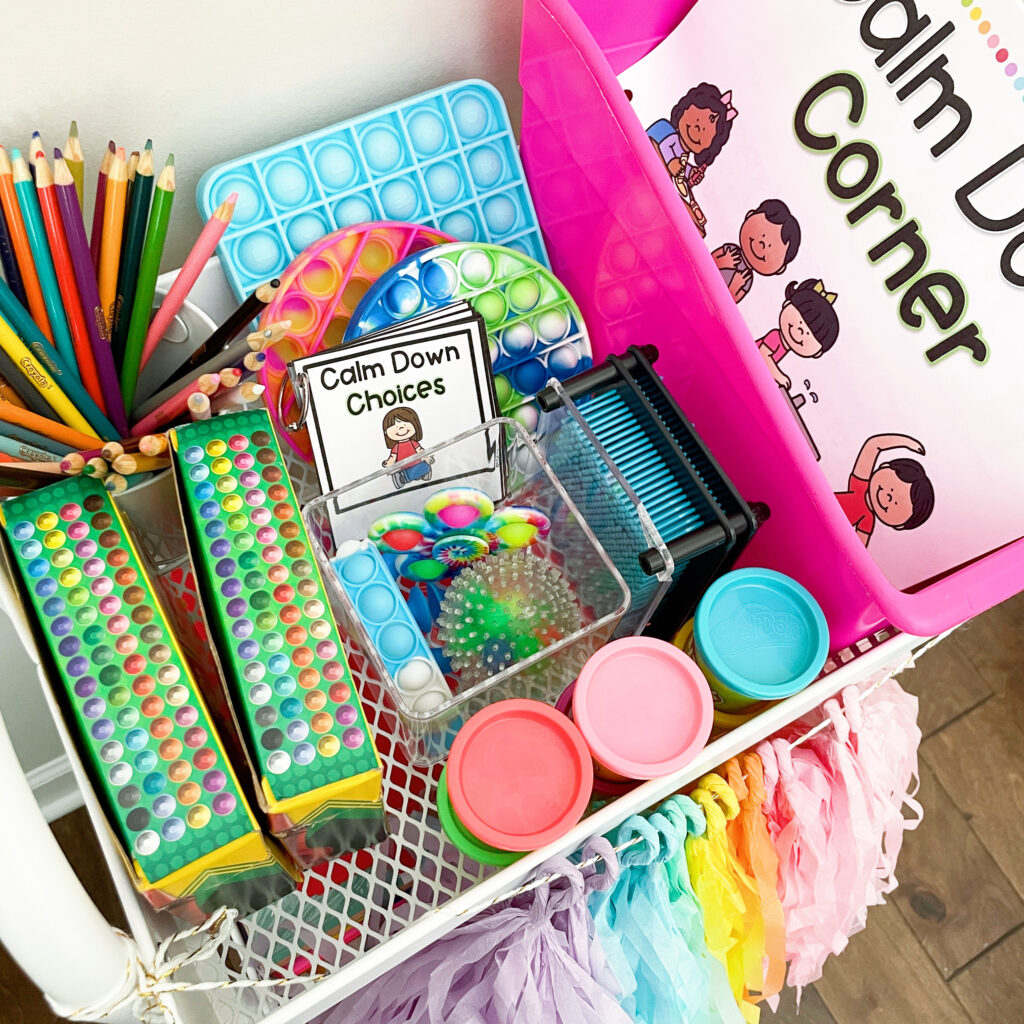
**Consider adding a calm corner to your classroom to help!
Movement While Learning: One of the best ways to manage the wiggles is to incorporate movement into the lesson instead of just saving it for breaks.
- Write the Room (scavenger hunt for sight words, numbers, etc.)
- Stand Up, Sit Down for True/False Questions
- Act It Out (act out story events, math problems, or science concepts)
Channeling Spring Energy into Engaging Learning Activities
Now that movement breaks are covered, let’s talk about ways to use that extra energy in a way that actually helps learning instead of making the classroom feel chaotic.
More Hands-On Learning: Now is a great time to switch things up with interactive activities. Think STEM challenges, sensory bins, partner games, and outdoor learning.
Give Kids More Voice & Choice: When kids have more control over their learning, they stay more engaged. Try letting them choose their center or activity order or l etting students be the “teacher” for a mini-lesson.
Outdoor Learning Opportunities: If the weather is nice, take the lesson outside! Read outside, practice counting with nature items, or do sidewalk chalk spelling words.

Meet the Teacher Without the Chaos – Managing the Madness: Kinder Management Made Simple
Final Thoughts & Encouragement
Springtime in Kindergarten can be a wild ride, but it’s also such a fun and exciting time. Instead of fighting against the wiggles, work with them. By adding purposeful movement breaks, bringing more engagement into lessons, and adjusting expectations, the classroom can stay calm, focused, and fun!