Why Teaching Procedures First Is the Best Classroom Management Strategy
When teachers search for classroom management tips, they’re often overwhelmed with endless advice. Use a clip chart. Try a reward system. Create classroom jobs. Build a token economy. The list goes on.
While many of these strategies can be helpful, not every classroom management technique has the same impact.
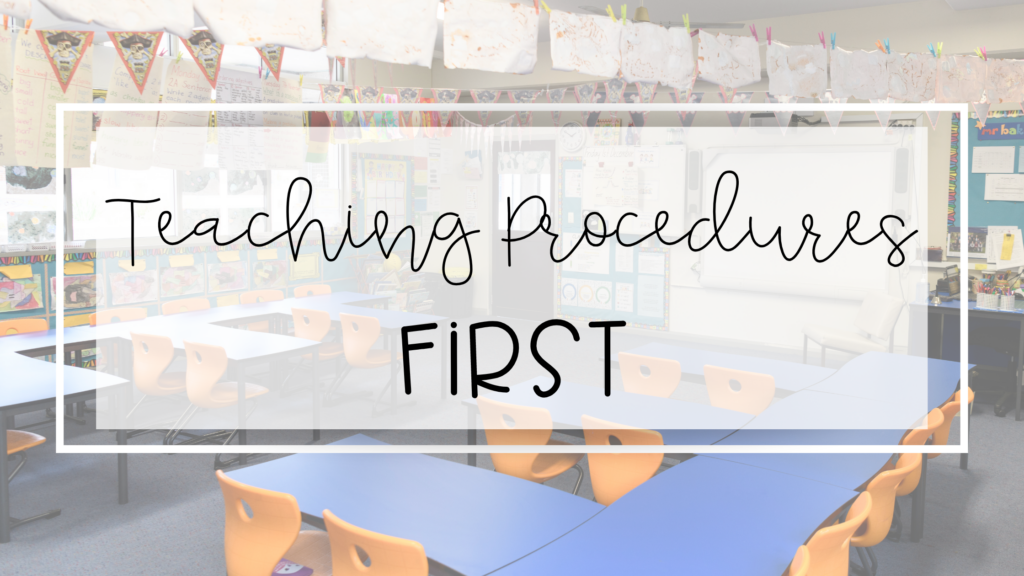
If you could only focus on one thing during the first weeks of school, it should be this: explicitly teaching classroom procedures with visual supports.
It may not seem exciting, but strong routines are what make everything else in your classroom possible. When students know exactly what to do and have visuals to remind them, they become more independent, confident, and successful throughout the school day.
Why Classroom Procedures Matter More Than Fancy Behavior Systems
Many behavior problems don’t happen because students are choosing to misbehave. They happen because students aren’t completely sure what is expected of them.
Think about it from a child’s perspective. They are entering a brand-new classroom with unfamiliar routines, new classmates, different expectations, and dozens of transitions they’ve never experienced before.
Click HERE to check out my visuals and slides
Without clear instruction, students are left guessing.
Teaching procedures removes that uncertainty. Instead of constantly correcting behavior, you are giving students the tools they need to be successful from the very beginning.
The goal isn’t to control students. The goal is to help them feel confident, capable, and safe in their classroom environment.
Teach Every Routine Explicitly
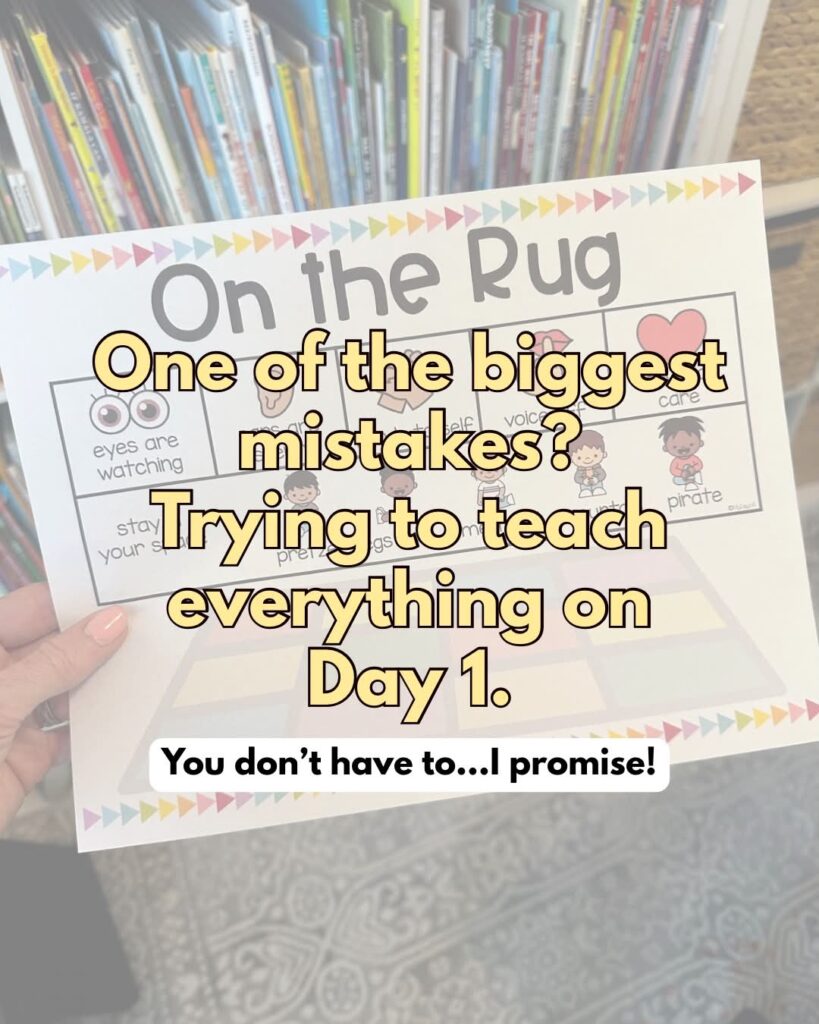
One of the biggest mistakes teachers make is assuming students already know how to do everyday classroom tasks.
Even if students attended preschool or another grade level before, every classroom is different. What was expected last year may not be what you expect this year.
Click HERE to check out my visuals and slides
Take time to explicitly teach routines like:
- Morning arrival
- How to sit in a chair
- How to sit on the carpet
- How to line up
- Bathroom procedures
- Lunch routines
- Recess expectations
- End-of-day dismissal
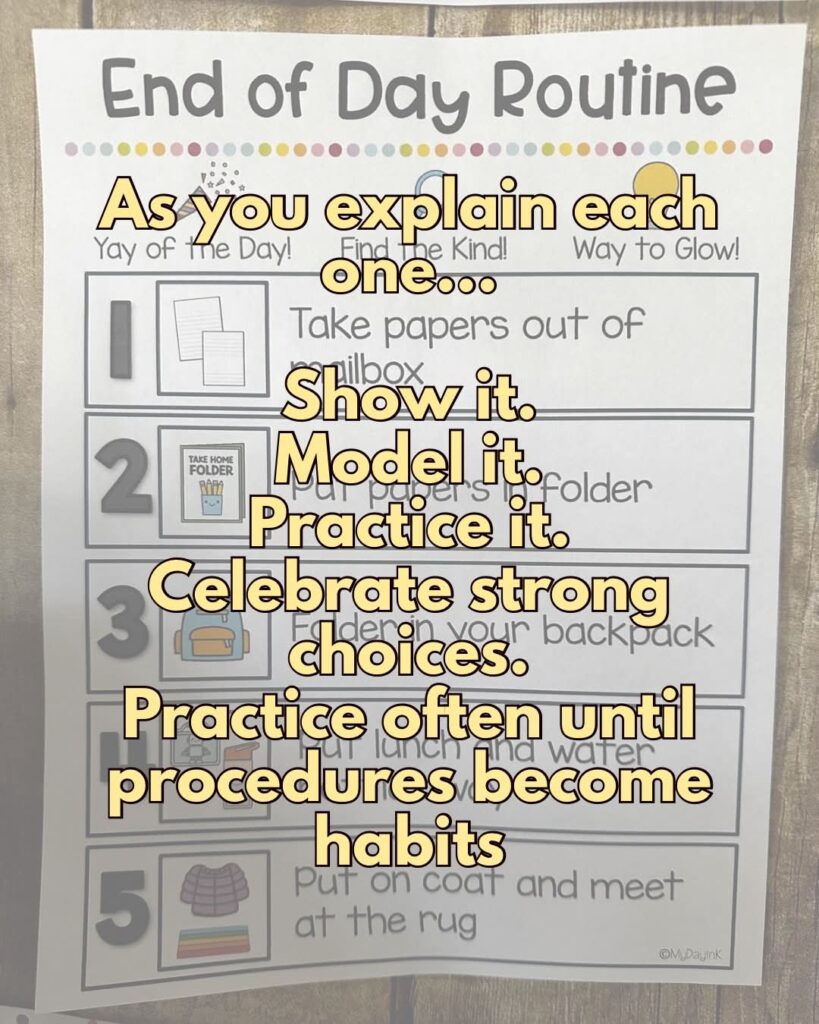
Instead of simply explaining these routines once, model them, practice them together, and revisit them often during the first few weeks of school.
The more opportunities students have to practice, the more automatic these procedures become.
Why Visual Supports Make Such a Difference
Young learners benefit tremendously from visual reminders.
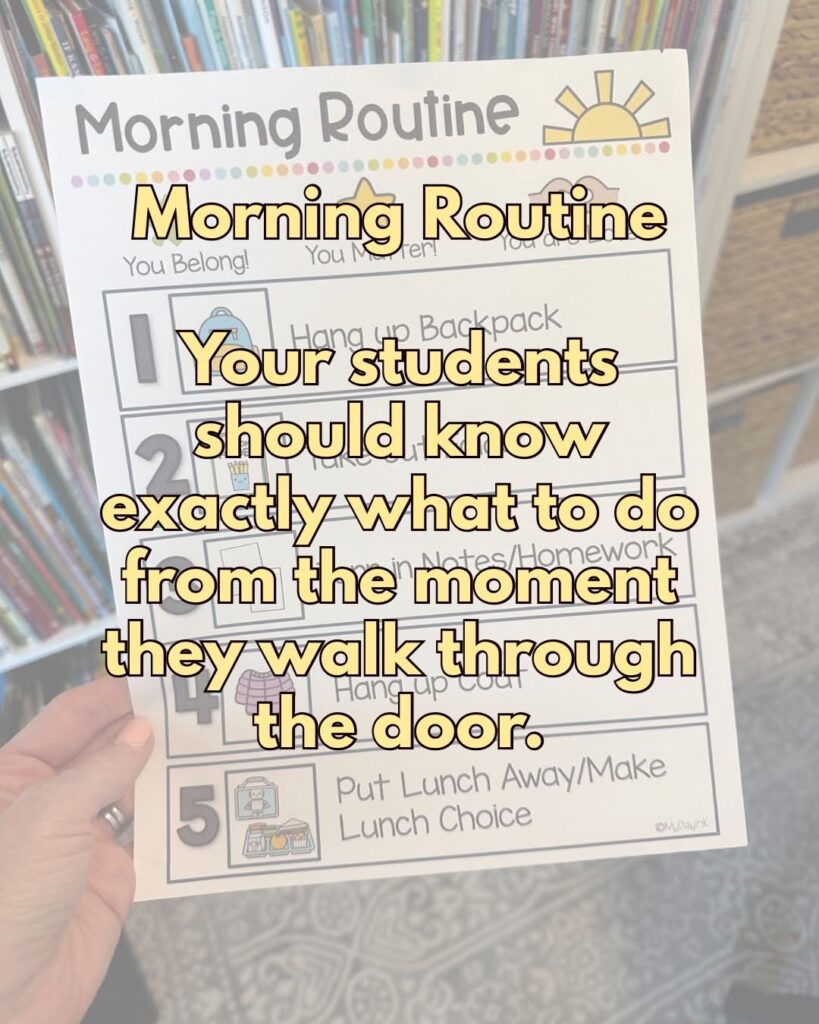
Even after you’ve taught a procedure several times, students won’t remember every step right away. Having visuals posted around the classroom allows students to check expectations independently instead of relying on constant teacher reminders.
Click HERE to check out my visuals and slides
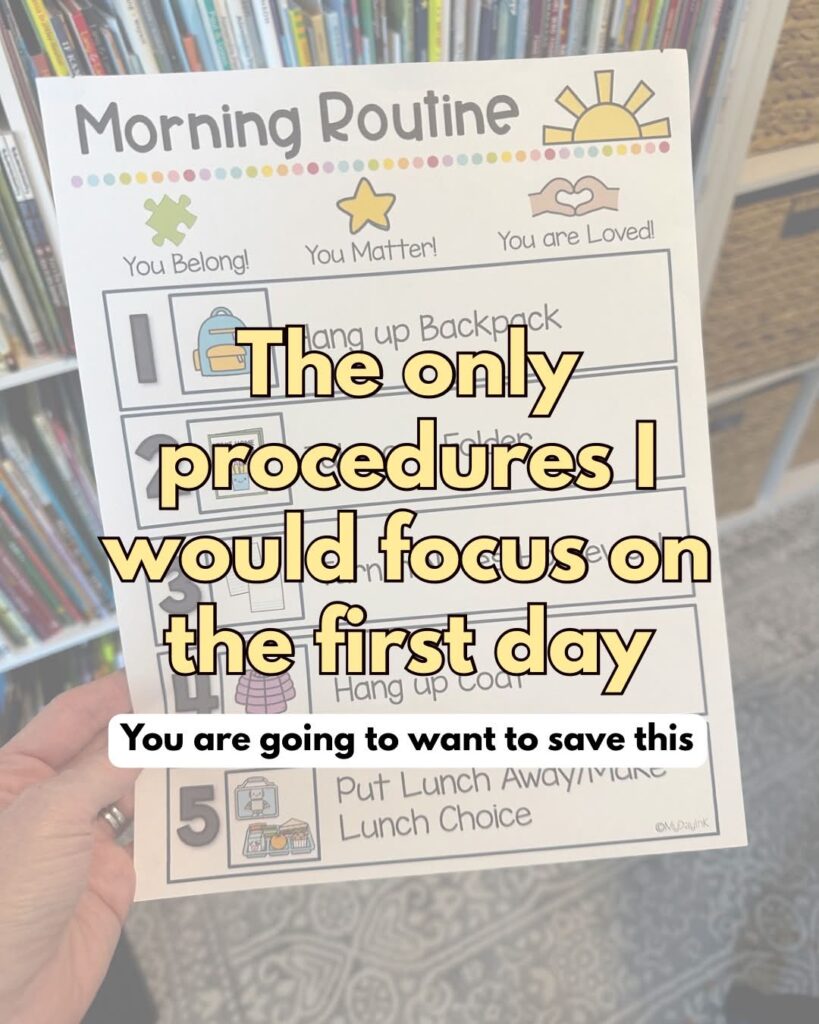
For example, your morning routine might include simple picture cards showing students how to:
- Hang up their backpack
- Turn in folders
- Choose lunch
- Begin morning work
Visual supports reduce confusion, build independence, and make transitions much smoother throughout the day.
They’re especially helpful for beginning readers, multilingual learners, and students who simply need extra reminders.
Practice, Practice… Then Practice Again
Teaching procedures isn’t something you do on the first day and then forget about.
The strongest classroom routines are built through repetition.
During the first few weeks of school, stop and practice whenever needed. If lining up isn’t going well, pause and try again. If students rush through cleanup, model it one more time and let them practice.
Click HERE to check out my visuals and slides
This extra time may feel slow in the moment, but it saves countless hours of redirection later in the year.
Think of it as an investment. Every minute spent practicing procedures now pays off for months to come.
Pair Procedures with Community Building
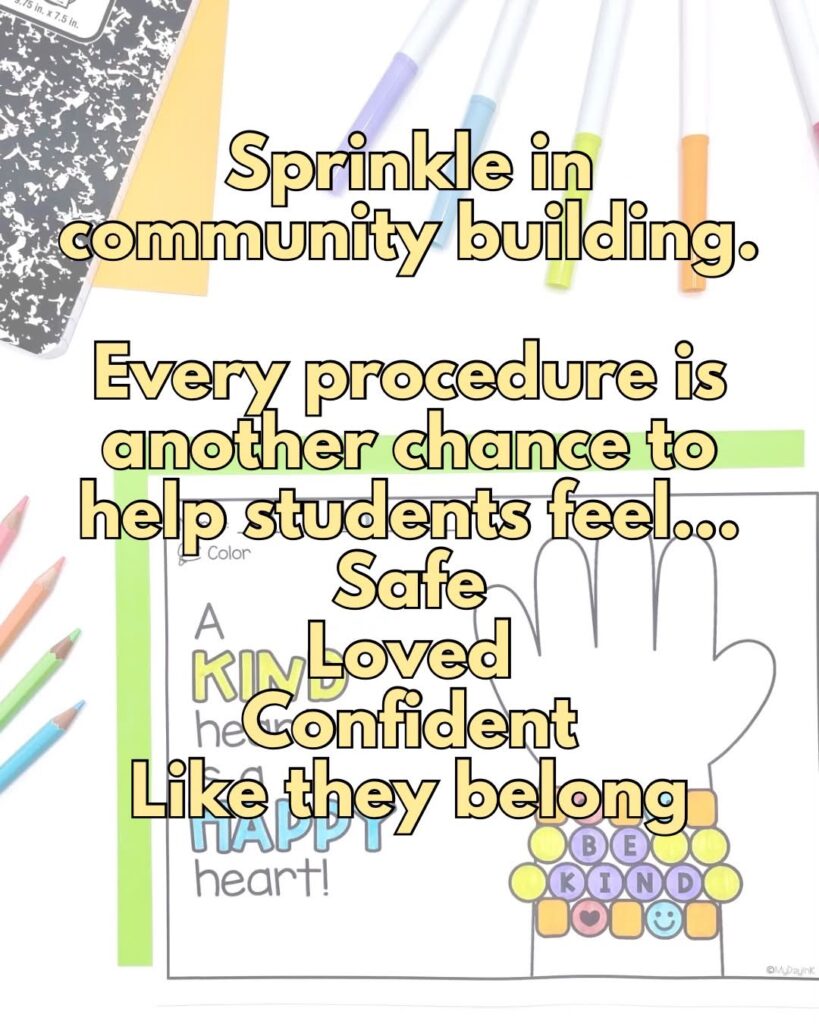
While students are learning classroom expectations, they’re also learning something just as important. They are figuring out whether they belong.
That is why procedures and community-building activities should go hand in hand.
Click HERE to check out my visuals and slides
As you teach routines, make time for activities that help students:
- Learn classmates’ names
- Work with different partners
- Share about themselves
- Practice kindness
- Celebrate successes together
When students feel connected to their classmates and teacher, they are much more likely to follow expectations because they feel like an important part of the classroom community.
Strong relationships make classroom management easier because students want to contribute positively to a classroom where they feel valued.
Consistency Beats Complexity Every Time
Teachers sometimes feel pressure to create elaborate classroom management systems with multiple reward charts, behavior trackers, and complicated routines.
But the most effective classrooms are often the simplest.
Students don’t need dozens of rules or complicated behavior programs.
They need:
- Clear expectations
- Consistent routines
- Visual reminders
- Opportunities to practice
- Positive relationships
Consistency is what builds confidence.
When students know exactly what to expect every day, they spend less energy wondering what comes next and more energy learning.
Teacher Tips for Teaching Procedures Successfully
If you’re introducing classroom procedures this year, keep these tips in mind:
- Teach one routine at a time instead of overwhelming students with everything at once.
- Model exactly what the procedure should look and sound like before asking students to try it.
- Let students practice multiple times throughout the day.
- Use visual supports students can easily reference independently.
- Praise students when they successfully follow routines.
- Revisit procedures after weekends, holidays, or long breaks.
Remember, reteaching isn’t a sign that something isn’t working. It is simply part of helping young learners build lasting habits.
Click HERE to check out my visuals and slides
Why This Approach Works
Strong classroom management doesn’t begin with consequences. It begins with clarity.
When students understand exactly what is expected, have visual reminders to support them, and feel connected to their classroom community, they are much more likely to succeed.
The first days and weeks of school aren’t about rushing into academics or trying to squeeze every lesson into your schedule.
They are about building routines and relationships that make everything else possible.
When students know what to do and where to go, and feel they truly belong, your classroom becomes a place where both behavior and learning naturally thrive.