5 Ways to Keep December Classroom Expectations Strong
Here are five December classroom expectations strategies to reinforce expectations, strengthen routines, and build classroom community with a FREE Day 1 mini lesson.
December is an exciting time in the classroom! There are special activities, seasonal celebrations, and plenty of things for students to look forward to. But all that excitement can also bring extra energy, more distractions, and a few classroom behavior challenges.
You don’t have to put your classroom expectations on hold to enjoy the season. December is actually a great time to revisit the routines and habits you’ve been building all year. A few intentional reminders can help students stay focused, make positive choices, and enjoy the month together.
If you’re looking for practical ways to strengthen your December classroom management, these five strategies will help you reinforce expectations while keeping your classroom community strong.
Why December Classroom Expectations Need a Little Extra Attention
By December, students have spent several months learning your classroom routines and practicing expectations. They know what the day looks like, how to transition between activities, and what it means to be a helpful member of the classroom community.
Still, routines can get a little wobbly as the excitement of the season builds.
Students may have a harder time listening, staying focused, or moving from one activity to the next. Changes to the regular schedule, special classroom activities, and anticipation of winter break can make familiar expectations easier to forget.
This doesn’t mean you need to start over with classroom management. Instead, use December as an opportunity to pause, review, and practice the habits that help your classroom run smoothly.
Here are five simple ways to keep expectations strong throughout the month.
1. Review Classroom Expectations Every Day
One of the easiest ways to support classroom management in December is to make time for quick expectation reminders.
Students benefit from hearing and seeing expectations consistently, especially during busy or exciting parts of the school year. A short conversation during morning meeting or before a transition can help everyone refocus.
Choose a few important expectations to review, such as:
- Listening when someone else is speaking
- Using the appropriate voice level
- Following directions and transitioning quickly
- Showing kindness to classmates
- Taking care of classroom materials
You don’t need to review every classroom rule at once. Choose one or two expectations to highlight and give students opportunities to talk about what those behaviors look and sound like.
You can also invite students to share examples of how they help make the classroom a great place to learn.
If you’re looking for more ways to teach and reinforce expectations, check out my post on Classroom Rules and Expectations. It shares ideas for involving students in creating classroom rules and helping them understand why those expectations matter.
Need more ideas for reviewing expectations throughout the school year? My post, 5 September Classroom Expectations Worth Reviewing, shares important habits and routines to revisit with young learners. The same expectations are worth reinforcing long after September!
2. Practice Expectations Before Exciting Activities
December often brings activities that look a little different from your regular classroom schedule. Maybe you’re planning a craft, a classroom celebration, a special read-aloud, or a fun holiday-themed center.
Before jumping into something exciting, take a few minutes to review what students need to do.
For example, before a holiday craft, remind students how to:
- Gather and use materials responsibly
- Share supplies with classmates
- Follow directions
- Clean up their work area
- Ask for help when needed
Keep your reminders short and specific. Instead of saying, “Remember to make good choices,” explain exactly what you expect students to do.
You can even ask students to demonstrate the expectations before the activity begins. A quick model gives everyone a clear picture of what successful participation looks like.
This small step can make special activities feel more organized and help students enjoy them without losing sight of classroom expectations.
3. Keep Classroom Routines Consistent
It’s tempting to let routines slide when the classroom schedule gets busy. But familiar routines can actually help students feel more comfortable and confident during a month filled with extra excitement.
Keep your regular procedures in place as much as possible. Continue using familiar signals, transition routines, classroom jobs, and daily schedules.
When something needs to change, let students know ahead of time. Explain what will be different, what will stay the same, and what you expect them to do.
Sometimes, even the routines you’ve practiced all year need a little reteaching. In When You Need a Classroom Routine Reteach, I share a simple process for reviewing, modeling, practicing, and reinforcing routines when students need a reminder.
You can also check out Full Year Procedures and Routines in the Classroom for ideas on routines and expectations to revisit throughout the school year.
Remember, consistency doesn’t mean every day has to look exactly the same. It means students can count on familiar expectations, even when the schedule changes.
4. Make Time for Social-Emotional Learning
December is a wonderful opportunity to strengthen classroom community and help students practice important social-emotional skills.
With all the excitement happening around them, students may need extra reminders to be patient, show kindness, work together, and consider how their actions affect others.
Look for small opportunities to bring these skills into your day.
Try activities like:
- Kindness conversations: Ask students to share ways they can make someone feel included or appreciated.
- Partner activities: Give students opportunities to practice listening, taking turns, and working together.
- Problem-solving scenarios: Talk through simple classroom situations and discuss positive ways to respond.
- Feelings check-ins: Give students a chance to identify how they’re feeling and what might help them have a successful day.
- Classroom challenges: Work together toward a shared goal that encourages cooperation and community.
These don’t have to be long lessons. A few minutes of intentional conversation can help students recognize the importance of kindness, empathy, and teamwork.
Looking for more ways to incorporate SEL into your daily classroom routine? Take a look at my post on Social-Emotional Learning Activities for the First Weeks of School. Many of these activities and conversations can be revisited throughout the year to continue building a caring classroom community.
5. Recognize and Celebrate Positive Choices
December classroom management isn’t only about reminding students what not to do. It’s also about noticing and celebrating the positive choices they make.
When students demonstrate an expectation, take a moment to acknowledge it. Be specific about what you noticed so students understand which behavior you’re reinforcing.
For example:
- “I noticed how quickly this group cleaned up their materials.”
- “Thank you for waiting patiently while your classmates shared.”
- “I love how everyone used kind words during that activity.”
- “You showed great teamwork when you helped each other.”
You can also recognize positive choices through classroom celebrations, positive notes, or opportunities for students to reflect on how they’re contributing to the classroom community.
If you want even more practical ideas for reinforcing positive behaviors, my post on Activities to Use When Reinforcing Expectations shares ways to build classroom management into everyday activities, centers, and classroom jobs.
The goal is to help students recognize that their everyday choices matter. When they see how their actions contribute to a positive classroom environment, they’re more likely to keep practicing those habits.
Make December Classroom Expectations Easier With Daily Mini Lessons
You don’t need to spend hours planning new classroom management lessons for December. A few focused reminders and practice opportunities can go a long way.
That’s why I created the In December, We Remember! December Management Playbook.
This 15-day collection of classroom management mini-lessons helps you intentionally review expectations, practice important skills, and celebrate your classroom community throughout the month.
Inside the complete playbook, you’ll find:
- 15 daily classroom management mini-lessons
- A clickable, easy-to-follow playbook
- December management slides and visuals
- Strong vs. Weak Choices activities
- A Gingerbread House Community Challenge
- December Positive Notes
The lessons are organized into three weekly themes:
- Days 1–5: Remember Our Routines
- Days 6–10: Building a Strong Community
- Days 11–15: Finish Strong Together
Each mini-lesson gives you a simple way to bring attention back to the expectations and skills that help your classroom run smoothly.
Get a FREE December Classroom Expectations Mini-Lesson!
Want to try one of the lessons before getting the complete playbook?
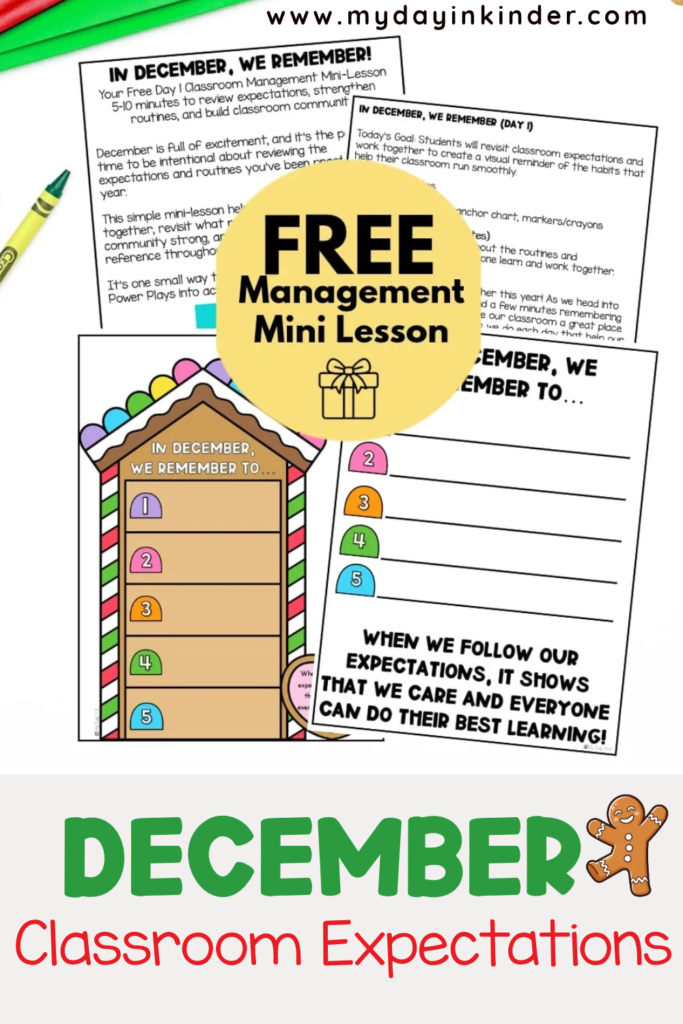
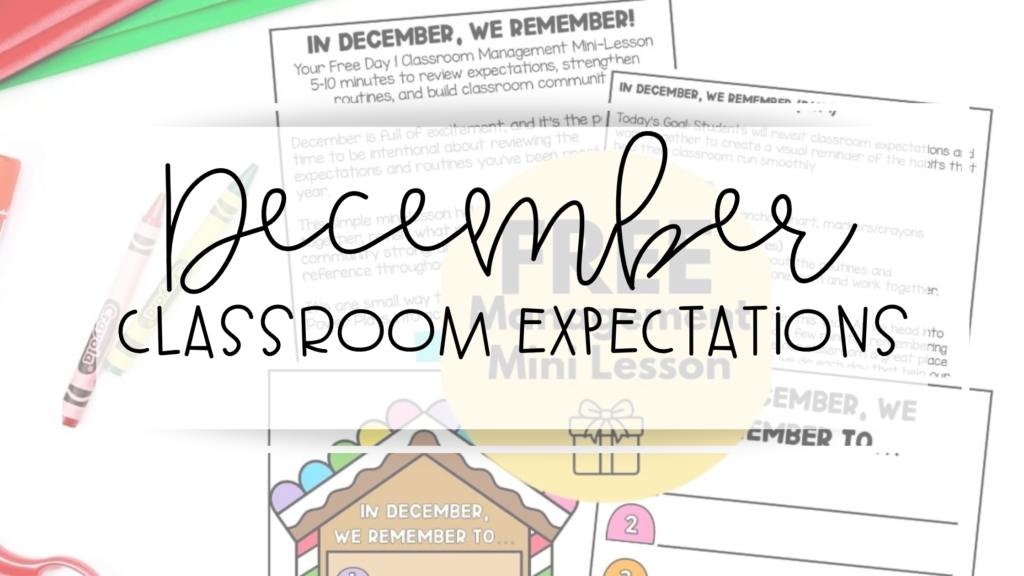
You can get a FREE copy of Day 1: In December, We Remember! This quick 5–10 minute mini-lesson helps students revisit classroom expectations and create a visual reminder of the habits that make their classroom a great place to learn.
Here’s how to use it with your class.
Day 1: In December, We Remember!
Goal: Students revisit classroom expectations and work together to create a visual reminder of the habits that help their classroom run smoothly.
Time: 5–10 minutes
Materials: The printable anchor chart or chart paper, markers, and crayons.
Step 1: Let’s Remember! (2 minutes)
Gather students together and talk about the routines and expectations that help everyone learn and work together.
You can start with this teacher prompt:
“We’ve learned so much together this year! As we head into December, we’re going to spend a few minutes remembering the little things that help make our classroom a great place to learn. What are some things we do each day that help our classroom run smoothly?”
Give students a chance to share their ideas.
Step 2: Let’s Create! (4–5 minutes)
Display the In December, We Remember To… anchor chart.
Invite students to share classroom expectations they want to remember and practice. Guide the conversation toward ideas like:
- Listening
- Voice levels
- Transitions
- Kindness
- Taking care of classroom materials
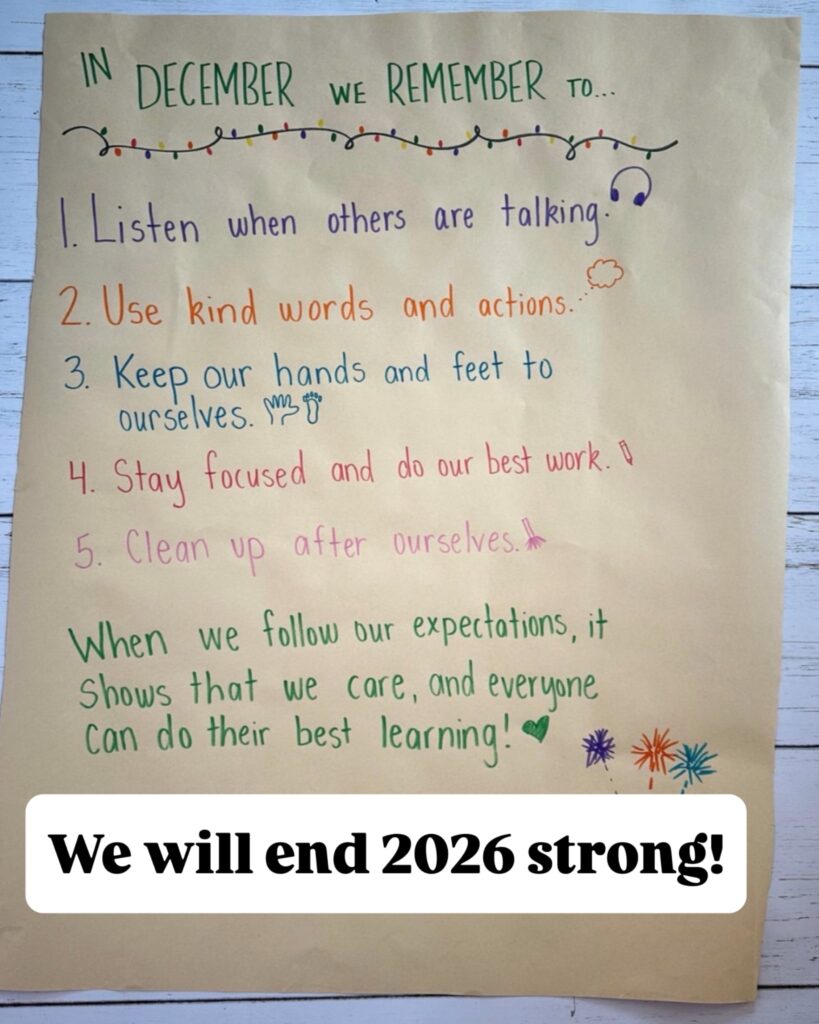
Add students’ ideas to the chart together. You can use the included printable or create your own anchor chart on chart paper. The goal is to give students a visual reminder they helped create and can refer to throughout December.
Step 3: Let’s Practice! (2 minutes)
Choose one expectation from your chart and invite students to demonstrate what it looks or sounds like. For example, if your class chooses listening, ask students to show what good listening looks like during a class discussion.
Celebrate their efforts and remind them that you’ll continue practicing these expectations throughout December.
Step 4: Keep It Going!
Display your completed anchor chart somewhere students can easily see it.
Refer to it before transitions, during morning meetings, and whenever your class needs a quick review.
Power Play Reminder: Use Visuals
Visuals make expectations clear and give students something concrete to revisit. Keep your chart visible and use it consistently throughout the month.
Want the FREE Day 1 Mini-Lesson?
You can get your copy of In December, We Remember! by joining the waitlist for the complete December Management Playbook. CLICK the image below to get the FREE Day 1 Mini-Lesson and join the Waitlist!
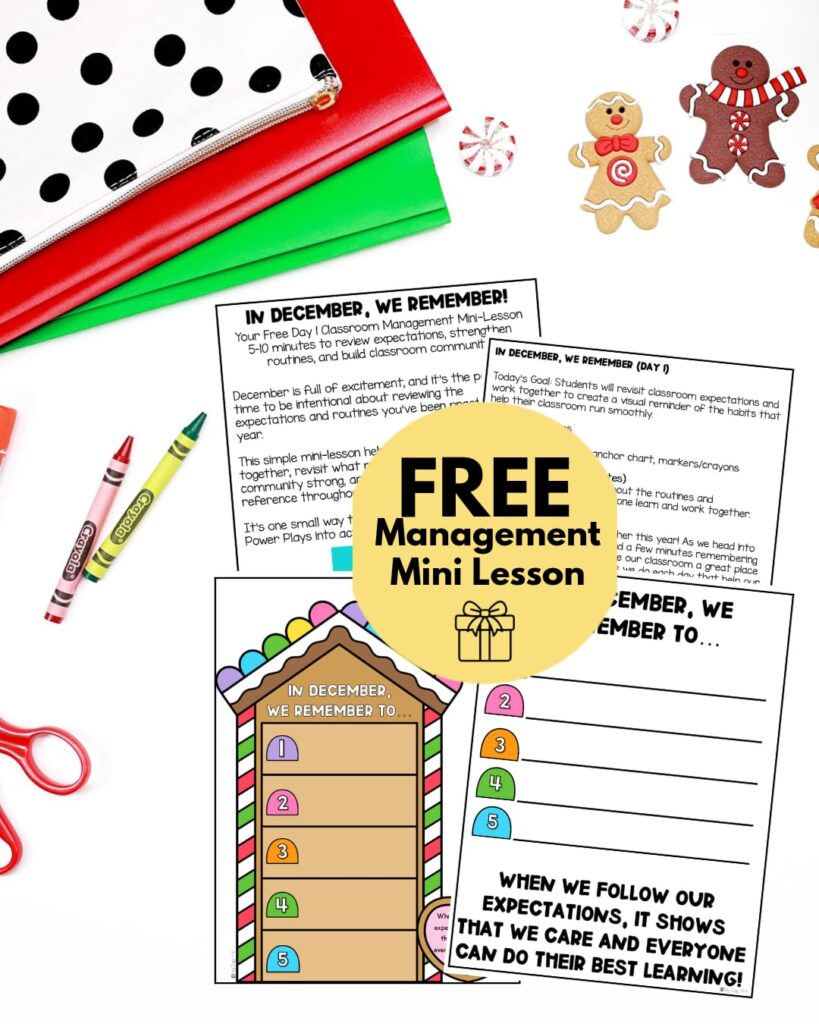
The complete 15-day playbook launches on Black Friday! When you join the waitlist, you’ll be the first to know when it’s available and get access to special pricing.
Finish December With Strong Classroom Expectations
December can be busy, exciting, and a little unpredictable, but your classroom management doesn’t have to fall apart along the way.
Keep expectations visible, practice routines, make time for community-building, and recognize the positive choices students make every day. Small, intentional reminders can help students stay connected to the habits that make your classroom a great place to learn.
And remember, you don’t have to do it all at once. A few minutes of focused practice each day can make a meaningful difference as you head toward winter break.
Pin For Later